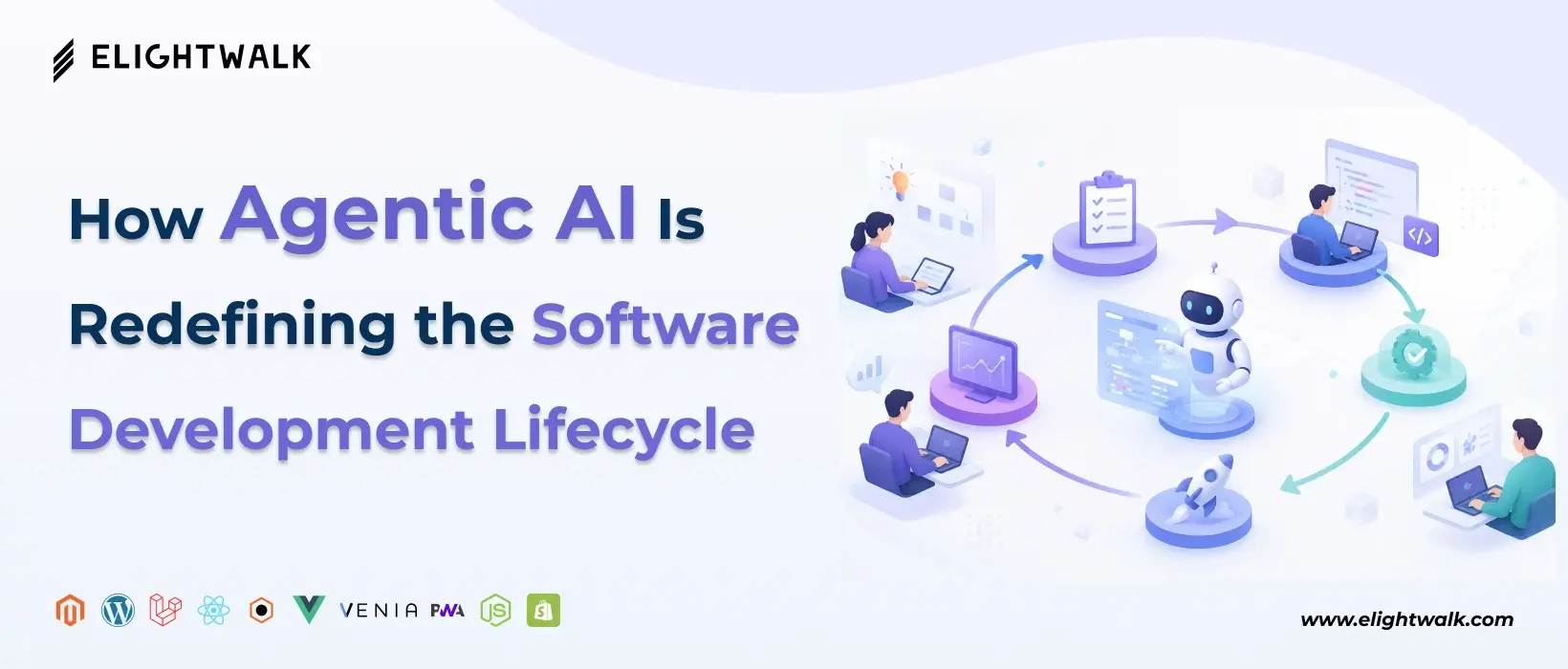
An AI-led Software Development Lifecycle is built around intelligent systems and autonomous AI agents that operate across every phase of software delivery. Rather than treating AI as a standalone productivity tool, modern engineering organizations are embedding AI into planning, development, testing, deployment, and operational workflows to create more adaptive and efficient delivery ecosystems.
The following components form the foundation of an Agentic SDLC.
AI-Powered Requirement Analysis
Requirement gathering has traditionally depended on extensive manual collaboration between stakeholders, business analysts, and engineering teams. AI-led SDLC introduces intelligent systems that can analyze business objectives, interpret documentation, and transform high-level ideas into actionable development tasks.
User Story Generation
AI agents can automatically generate structured user stories from meeting transcripts, product briefs, support tickets, and business requirements. By understanding context and business intent, these systems help teams accelerate backlog creation and improve clarity of requirements.
This reduces the time spent manually drafting development tickets while ensuring better alignment between business goals and engineering execution.
Requirement Refinement
Requirements often evolve during development, creating ambiguity and inconsistencies across teams. AI systems can continuously analyze changing requirements, identify missing dependencies, detect conflicts, and recommend refinements before implementation begins.
This enables organizations to reduce misunderstandings, minimize rework, and improve the quality of requirements throughout the project lifecycle.
Context-Aware Planning
AI-driven planning systems can evaluate project history, engineering capacity, technical dependencies, and risk factors to generate more accurate delivery timelines and sprint plans.
Instead of relying entirely on static estimations, AI agents provide dynamic planning recommendations based on real-time development data and operational insights.
AI-Driven Architecture & Design
Modern software architecture decisions directly influence scalability, performance, maintainability, and operational efficiency. AI-led SDLC platforms are increasingly supporting engineering teams during the architectural planning and technical design phases.
System Design Recommendations
AI agents can analyze project requirements and recommend suitable architectural patterns, frameworks, APIs, and infrastructure configurations based on scalability needs and business objectives. For example, AI systems may suggest microservices architectures for highly scalable platforms or serverless solutions for event-driven applications.
Dependency Analysis
Large-scale applications often involve complex dependency chains across services, libraries, APIs, and infrastructure components. AI systems can continuously map these dependencies, identify compatibility risks, and predict integration issues before deployment. This improves system stability and reduces failures caused by outdated or conflicting dependencies.
Scalability Predictions
AI-powered analytics can simulate system behavior under varying workloads and predict scalability challenges before production deployment. These insights help engineering teams proactively optimize infrastructure and application performance. By identifying performance bottlenecks early, organizations can reduce the risk of downtime and improve long-term system resilience.
Autonomous Code Generation
One of the most visible aspects of AI-led SDLC is autonomous code generation. Modern AI coding systems are evolving beyond autocomplete suggestions into collaborative engineering agents capable of building functional application components with contextual understanding.
AI Coding Agents
AI coding agents can generate code based on business requirements, technical specifications, and architectural guidelines. These systems can create APIs, database queries, frontend components, integrations, and infrastructure configurations with minimal manual effort. As these agents become more advanced, they are increasingly participating in full development workflows rather than isolated coding tasks.
Pair Programming with AI
AI-assisted pair programming enables developers to collaborate with intelligent systems during implementation. Developers can use AI to explore alternative solutions, generate boilerplate code, debug issues, and accelerate development workflows. Rather than replacing developers, AI serves as a real-time engineering collaborator, enhancing productivity and reducing repetitive work.
Code Optimization and Refactoring
AI systems can continuously analyze code quality, detect inefficiencies, and recommend optimizations. They can identify duplicated logic, improve performance, modernize outdated code patterns, and enforce coding standards across large codebases. This helps organizations reduce technical debt and maintain cleaner, more maintainable applications over time.
Intelligent Testing & QA
Testing remains one of the most resource-intensive phases of software development. AI-led SDLC introduces intelligent QA systems that improve test coverage, accelerate validation, and reduce manual testing effort.
Automated Test Creation
AI agents can automatically generate unit tests, integration tests, regression test cases, and API validation scripts directly from application code and requirements. This enables faster testing cycles while improving overall software reliability.
Self-Healing Test Cases
Traditional automated tests often fail when application interfaces or workflows change slightly. AI-powered self-healing test systems can adapt to UI changes, dynamically update locators, and maintain test stability without constant manual maintenance. This significantly reduces QA overhead in rapidly evolving applications.
Continuous Validation
AI systems can continuously monitor code changes, evaluate release risks, and validate software quality throughout the development lifecycle rather than only during dedicated testing phases. Continuous validation helps teams detect defects earlier and build confidence in releases.
AI in DevOps & Deployment
AI is increasingly transforming DevOps operations by enabling more intelligent infrastructure management, deployment automation, and operational decision-making.
Predictive CI/CD Pipelines
AI-enhanced CI/CD pipelines can predict deployment risks, identify unstable builds, prioritize testing based on code changes, and automatically optimize release sequencing. These capabilities help reduce failed deployments and accelerate software delivery.
Infrastructure Automation
AI agents can manage infrastructure provisioning, scaling, configuration optimization, and resource allocation dynamically based on application demand and operational metrics. This improves infrastructure efficiency while reducing manual DevOps intervention.
AI-Assisted Incident Management
Operational incidents can significantly impact business continuity. AI-powered monitoring systems can detect anomalies, identify root causes, recommend remediation actions, and, in some cases, automatically resolve operational issues before they escalate.
This allows organizations to improve system reliability and reduce downtime.
Continuous Monitoring & Learning
Unlike traditional SDLC models that often end after deployment, AI-led SDLC emphasizes continuous learning and system improvement throughout the software lifecycle.
Feedback Loops
AI systems can collect feedback from users, operational metrics, support tickets, and production logs to improve software quality and development processes continuously. This creates a data-driven feedback cycle that helps teams make better engineering decisions over time.
Production Intelligence
AI-powered observability platforms analyze real-time production data to identify performance trends, user behavior patterns, infrastructure bottlenecks, and security risks. These insights enable proactive optimization and faster operational response.
Self-Improving Systems
One of the defining goals of Agentic SDLC is the development of self-improving software ecosystems. AI agents learn from historical data, operational outcomes, and engineering feedback to continuously refine workflows, optimize code quality, and improve delivery efficiency over time. As these systems mature, organizations move closer to highly adaptive, intelligent software delivery environments capable of operating at scale with significantly reduced manual coordination.