Loading...

AI-Driven Insights into E-Commerce Consumer Behavior

13 Mins
Jayram Prajapati  ·   25 Feb 2026
Share to:
AI analytics dashboard revealing e-commerce consumer behavior patterns and insights
service-banner

One of the key reasons for e-commerce success is understanding how consumers behave. Every click, search, and purchase shows what buyers want. So, businesses need to figure out what customers seek, when they want it, and why they make their choices. With this knowledge, companies can enhance product listings, pricing strategies, promotions, and user experience. These efforts will lead to higher conversion rates, better customer retention, and more lifetime value.

AI has completely revolutionized how consumer behavior is studied and leveraged. Originally, companies mainly depended on historical reports and static data. AI can now manage large amounts of real-time behaviour data. It identifies patterns, makes predictions, and suggests the best actions.

E-commerce brands offer customers personalized shopping experiences. They help with demand forecasting and enable quick, informed decisions. These insights give brands a clear edge over competitors.

What Are AI-Driven Consumer Insights?

AI-driven consumer insights come from customer data. They use artificial intelligence, machine learning, and advanced analytics. AI-based customer analytics helps identify patterns, predict behaviour, and uncover new insights. They constantly analyse large datasets with behavioural, transactional, and interaction data. AI solutions go further. They show what happened, explain why it happened, and predict what might happen next. This helps businesses stay ahead of customer needs.

Traditional analytics and AI-powered insights mainly differ in the way they process and utilize the information. Traditional analytics relies on historical data through reports and static dashboards. It is based on fixed rules that can only illustrate what has happened so far. AI-powered analytics is not only changing but also foreseeing.

It keeps learning from new data. It adjusts to changing customer behaviour and suggests recommendations. E-commerce companies can go beyond simple performance tracking. They can focus on data-driven choices. This shift leads to better personalization, improved targeting, and a more enjoyable customer experience.

How AI Analyzes E-Commerce Consumer Behavior

AI analyzes e-commerce consumer behavior using machine learning and large-scale behavioral data modeling. All user interactions are tracked. This includes product views, search queries, time spent on pages, cart additions, and purchases. Then, this information is turned into structured data. Machine learning algorithms find patterns in the data. They can reveal which product combinations increase conversion rates, which signals indicate purchase intent, and which behaviours cause customer churn. As the models train on new data, they get more accurate. This helps the system spot finer behavioural patterns.

With real-time data processing, AI can analyze customer behavior as it occurs. AI systems do not need to wait for daily or weekly reports and can respond promptly to changes in browsing or buying behavior. If a customer checks a product multiple times or leaves a cart, AI can quickly send personalised recommendations, discounts, or targeted messages. Real-time engagement helps e-commerce platforms capture key customer moments. This gives them a competitive edge.

Predictive and prescriptive analytics enable AI-driven insights to reach new heights. Predictive analytics shows how likely a customer is to act next. This could be buying, switching brands, or stopping shopping altogether. Prescriptive analytics, on the other hand, uses predictions to suggest the best actions. This could mean choosing a product, setting a price, or running a promotion. These technologies help e-commerce businesses make smart, data-driven decisions and stay competitive.

Types of Consumer Data Used by AI in E-Commerce

AI requires substantial consumer data. This data helps it create accurate insights and offer personalised experiences. AI combines behavioral, transactional, and feedback data to create a detailed, evolving view of each customer. This helps e-commerce companies understand shoppers' intents, preferences, and buying patterns.

Browsing and Clickstream Data

This describes the steps a user takes on an e-commerce site. It involves visiting pages, spending time on products, scrolling, and following a specific navigation path. AI uses data to see how customers move through the site. It tracks which products catch their eye and where users drop off in the buying process.

Purchase and Transaction History

This information reveals customers' purchasing habits, including which products they buy, how often, and how much they spend. AI, by analyzing this data, can sort customers into segments such as loyal customers and those with the highest spending. It also enables the prediction of purchase behavior and the estimation of customer lifetime value.

Search Behavior and Product Interactions

Search keywords, product views, product comparisons, and product wish-list additions reveal customer interests. They also indicate how close a customer is to a final decision. AI leverages these signals to determine what customers really need. It not only recommends the products they would love but also personalizes their shopping journey.

Customer Feedback and Reviews

Through ratings, reviews, and comments, consumers convey their level of satisfaction. At the same time, they communicate their preferences and possible issues. AI can analyze data sentiment. This provides them with insights into how customers feel and whether they are satisfied with the product or brand. Businesses then apply the findings to improve their products and resolve customer issues.

AI develops a consolidated, smart view of consumer behavior. This helps e-commerce brands go beyond basic metrics. They can make smarter, data-driven choices. This leads to higher engagement, better conversion rates, and stronger customer loyalty over time.

Key AI-Powered Consumer Behavior Insights

AI collects customer data and provides insights. This helps e-commerce businesses understand customer actions, motivations, and future behaviour. Brands can use this customer insight to improve their marketing, merchandising, and customer experience.

Purchase Intent Prediction

AI uses data such as browsing history, product views, cart activity, and purchase records to figure out how likely a customer is to buy. By segmenting customers by value, businesses can tailor their sales approach to top customers. Meanwhile, marketing emails can be sent to the remaining customers.

AI can detect when a customer is about to abandon their cart or is hesitating. It can then recommend helpful actions, such as sending a reminder, offering a personalized incentive, or suggesting a product. The goal of these interaction steps is to reduce the cart abandonment rate and improve sales recovery.

Customer Segmentation and Profiling

By using behavioral, demographic, and transactional data, AI segments customers. Therefore, companies are not required to use general categories such as "female" or "Millennials". They can, instead, define a customer profile based on similar behaviours.

This AI-enabled customer segmentation allows a marketing team to deliver the right message to customers at the right time and through the right channel.

Product Preference and Trend Analysis

AI can spot trends by analyzing changes in purchasing behavior, browsing patterns, and seasonal trends. This allows companies to predict the future demand. Armed with this information, a business can not only optimize its inventory plans but also set prices and run customer promotions more efficiently.

AI can identify both products selling quickly and those lagging in sales. This leads to better merchandising decisions and reduces the risk of excess inventory or missed sales.

Customer Journey Mapping

AI tracks how customers engage with websites, mobile apps, email, and ads. This provides a complete view of the customer journey. It also helps us track customer movement from initial interaction through purchase and beyond.

Plus, it shows where we can improve, like pages where customers leave or features that confuse them. As the customer journey improves, companies will enhance customer experiences and increase conversion rates.

How AI Helps Tailor the Shopping Experience

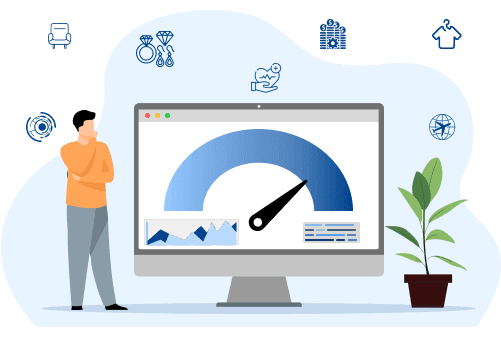
Online stores can tailor content, deals, and recommendations to each user's mood. This way, customers feel more understood and appreciated. AI-powered systems gather and analyse data on a person's browsing and buying habits. They also look at similar users’ behaviour to create personalised product recommendations. This way, platforms pick the best offers for different shoppers. This helps them find something they will buy and enjoy.

Dynamic Pricing, Discounts, and Promotions

AI algorithms adjust prices, discounts, and promotions for products that change often. They do this by considering demand, customer behaviour, and market conditions. For example, loyal customers might get exclusive deals. Price-sensitive customers can also benefit from targeted promotions. These personalised pricing strategies help boost conversion rates and increase overall revenue.

Personalised Marketing Messages and Ads

Personalised emails and ads use AI to identify the most relevant messages, products, and delivery times for each individual. By analysing engagement patterns and purchase behaviour, AI improves marketing precision. This makes communication more relevant, reduces customer frustration, and increases both open rates and conversion rates.

Advantages that E-commerce Businesses Can Get from AI-Powered Consumer Insights

AI-driven consumer insights help online retailers respond to actual customer behaviour instead of relying on guesswork. Knowing what customers want, like, and how they shop helps a company enhance its journey. This spans from the first brand interaction to the purchase and after. AI can boost conversion rates. It identifies buyers ready to purchase. Then it offers personalised recommendations, deals, and messages tailored to their needs. Such a strategy removes obstacles for buyers and builds their confidence.

Stronger Customer Retention and Loyalty

Customer production is increasing as the firm-customer relationship improves. The customer feels more valued now. With AI, companies can surprise customers with relevant and timely content. This builds loyalty and encourages repeat purchases.

Higher Marketing ROI Through Precision Targeting

Higher marketing ROI is fundamentally the result of precise targeting and the use of the minimum marketing focus. AI helps ads, mailings, and special offers reach the right audience at the right time. This boosts engagement and cuts acquisition costs.

Smarter Inventory and Pricing Decisions

AI helps make stock and pricing decisions easier and smarter. It does this through demand forecasting and trend analysis. Companies can avoid overstocking or stockouts. They can price their products wisely and offer discounts effectively. This helps boost profits and improve overall performance.

Challenges and Limitations of AI in Consumer Behavior Analysis

Using AI, businesses can better understand consumer behavior than before. However, AI remains a technology with weaknesses. So, online businesses must explore these issues and understand current needs before fully adopting technology.

Key Challenges of Using AI for Consumer Insights

  • Data is not always clean or complete: E-commerce data is often disorganized, spread across multiple platforms, and lacks essential details. If the data is of poor quality, the result is faulty or misleading insights from AI.
  • AI models can struggle to adapt to change: Consumer behavior is constantly influenced by factors such as trends, seasons, and the economy. A model trained on last year's data won’t do well today. It's essential to update and retrain the model regularly to remain relevant.
  • Connecting AI with existing systems can be challenging: Businesses typically use separate tools for sales, marketing, and customer management. AI integration into these systems can be complex and costly, especially for smaller e-commerce brands with limited technical resources.
  • Bias in data can lead to unfair results: If the historical data used is biased, the AI is likely to reproduce and even amplify that bias. This can result in unfair targeting, missed opportunities, or biased treatment of specific customer groups.
  • AI decisions are not always easy to explain: Highly complex AI algorithms often operate in opaque ways and do not clearly explain how decisions are made. When teams cannot understand AI recommendations, trust in the system may decline.
  • Privacy and security remain ongoing concerns: AI systems rely on large volumes of personal and behavioral data, creating privacy and security risks. Businesses must safeguard customer data and comply with data protection regulations.
  • AI lacks human understanding and judgment: While AI excels at pattern recognition, it cannot fully interpret emotions, intent, or nuanced context. Overreliance on AI without human oversight can lead to poor decisions in complex situations.

Balancing AI with Human Expertise

Firms address these challenges by building accountable AI systems, setting ethical standards to reduce bias, and using privacy-enhancing technologies to protect customer data. Many businesses adopt a hybrid approach that combines human expertise with AI. This strategy delivers more accurate and reliable insights while maintaining trust, fairness, and long-term value.

Future of AI in E-Commerce Consumer Insights

AI is evolving from its initial role as an analytics tool into a full-fledged system that genuinely understands shoppers. In the coming years, it will not only track customer behaviour but also interpret intent, preferences, and emotional signals to determine when users are most likely to buy.

Hyper-Personalization at Scale

  • Dynamic shopping experiences: E-commerce will move far beyond basic product recommendations. AI will personalize the entire shopping journey, including product assortments, offers, content, and even page layouts, based on individual preferences and past behaviour.
  • Faster and more relevant discovery: By tailoring experiences in real time, AI will help customers find what they want more quickly, reducing friction and increasing engagement.

Voice and Visual Search Behavior Tracking

  • Voice-driven intent understanding: As voice assistants gain adoption, AI will analyze spoken queries to better understand user intent, context, and urgency.
  • Visual exploration insights: Image-based searches and visual browsing behaviour will help AI infer preferences, styles, and product interests, enabling more accurate recommendations.

Emotion-Based and Intent-Driven Analytics

  • Emotion recognition through behaviour: AI systems will analyze interaction pace, browsing patterns, and engagement signals to infer emotions such as excitement, confusion, or hesitation.
  • Real-time adaptive responses: Based on detected intent and emotional cues, AI can adjust recommendations, messaging, or pricing strategies instantly to better support the shopper.

Together, these advancements will help e-commerce brands shift away from a purely product-focused approach toward building smarter, more personalized, and more meaningful relationships with their customers.

Essence

Customers today expect quick, relevant, and highly personalised experiences, which is why AI-driven consumer insights have become essential for e-commerce growth. AI enables businesses to predict demand, deliver the right products at the right time, and build stronger, long-term relationships with customers. By closely tracking how users search, navigate, and purchase, companies can significantly improve conversion rates and customer retention.

In an increasingly competitive online market, brands that leverage AI to deeply understand customer behaviour gain a clear strategic advantage. The first step is adopting AI tools that can decode customer data, identify behavioural patterns, and transform insights into actionable business strategies. Working with an experienced AI development partner can make this transition smoother and more effective.

Discover Elightwalk’s advanced AI development services to build intelligent, data-driven solutions that help you connect with your customers more meaningfully and drive sustainable e-commerce growth.

FAQs

What are AI-driven consumer insights in e-commerce?

How does AI improve understanding of online shopper behavior?

What type of data does AI use to analyze consumer behavior?

How does AI help increase e-commerce conversion rates?

Can small e-commerce businesses use AI analytics?

Is AI-driven consumer analytics safe for customer data?

How does AI help with product recommendations?

Jayram Prajapati
Full Stack Developer

Jayram Prajapati brings expertise and innovation to every project he takes on. His collaborative communication style, coupled with a receptiveness to new ideas, consistently leads to successful project outcomes.

Most Visited Blog

After move to another server ScandiPWA theme is not responding.

Are you having problems with the ScandiPWA theme after a server migration? To maintain responsiveness and performance on Magento PWA storefront, use our simple guide to effectively troubleshoot.

How AI-Powered Search is Transforming Magento Stores in 2026
See how next-generation AI search is revolutionizing Magento in 2026, delivering smarter SEO results, smoother shopping experiences, and measurable boosts in revenue.
How Business Owners Can Stay Visible in the Age of AI Search
Stay visible in AI-driven search with Generative SEO. Learn how to optimize for ChatGPT, Google Gemini, and AI visibility using question-based content.