Loading...

How AI Product Recommendations Increase eCommerce Sales

14 Mins
Jayram Prajapati  ·   03 Jun 2026
Share to:
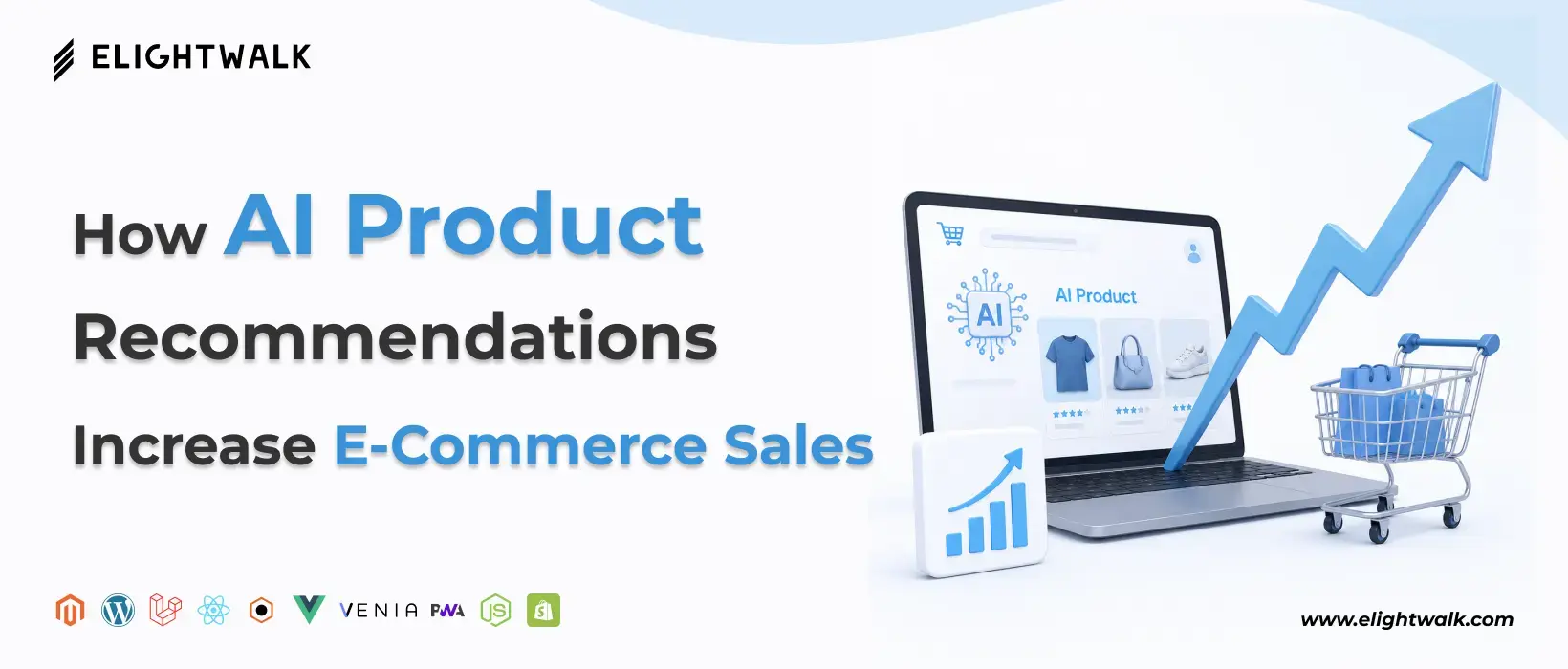
AI-powered product recommendations helping eCommerce businesses increase sales and customer engagement
service-banner

Personalization is a major driver of growth for many eCommerce businesses today. Shoppers nowadays expect brands not only to know their tastes but also to suggest products that they are most likely to like and provide personalized shopping experiences at every step. Customer demands are increasing, and simply showing generic product listings or relying on traditional recommendation mechanisms will no longer be sufficient.

McKinsey & Company has published statistics showing that personalization can increase revenue by 5% to 15% while reducing customer acquisition costs by up to 50%. Another study shows that 80% of buyers say they are more likely to buy from brands that provide personalized experiences.

Here is a perfect example of how AI-based product recommendations are completely changing the face of digital commerce. Today's AI recommendation systems harness not only machine learning and predictive analytics but also real-time customer behavior data to make highly precise product recommendations. These tools analyze the user's past browsing, purchases, searches, habits, and tastes to tailor product suggestions and generate personalized shopping paths that drive more engagement and sales.

In addition to increasing average order value (AOV), AI product recommendations significantly enhance customer loyalty and the overall customer experience, as well as create more cross-selling and upselling opportunities. From personalized homepages to "customers who bought this also bought" recommendations, AI-based recommendation engines enable businesses to provide more intelligent and lucrative shopping experiences.

In this article, we will discuss how AI product recommendations work, explore different types of recommendation engines and their advantages over traditional methods, and see how they can help increase online sales and customer loyalty for eCommerce businesses.

What Are AI Product Recommendations?

Artificial intelligence-based product recommendations are sophisticated systems that use a blend of artificial intelligence, machine learning, and customer data to suggest the most suitable products for online shoppers. These recommendation engines analyze the customer's behavior, preferences, and even the points of interaction with the website in the moment to produce personalized shopping experiences that not only attract the customer's attention but also increase the likelihood of purchases.

Until recently, recommendation systems were rule-based and consisted of simple labels such as "best sellers," "related products," and categories assigned manually. Not only did these methods deliver a kind of personalization, but most of the time, they were not capable of addressing the needs of changing customer interests and real-time shopping behavior. With customer interactions, AI-powered recommendation systems can make more accurate recommendations without human intervention.

Today's AI recommendation engines for eCommerce gather and analyze various data points such as browsing history, purchase patterns, search queries, cart activity, click behavior, demographics, and even seasonal shopping trends. With a vast amount of customer data, AI can discover subtle correlations and even determine which products a shopper is most likely to buy.

Machine learning algorithms greatly influence recommendation accuracy. First, these algorithms observe customer behavior. Then, they update recommendations based on user activity. Also, personalization gets better with predictive analytics. This method understands what customers want. It predicts their future purchases and product choices even before they see them.

Common Examples of AI Product Recommendations

  • Frequently bought together products
  • Personalized homepage recommendations
  • Recommended products based on browsing history
  • AI-powered upsell and cross-sell suggestions
  • Real-time product recommendations during checkout

These AI-powered recommendation systems help eCommerce businesses create more personalized customer experiences while increasing conversions, average order value (AOV), and long-term customer loyalty.

How an AI Recommendation Engine for eCommerce Works

An AI recommendation engine for eCommerce works by collecting customer data, analyzing shopping behavior, and using machine learning algorithms to deliver highly personalized product suggestions in real time. These systems continuously learn from customer interactions to improve recommendation accuracy and create smarter shopping experiences.

The process starts with data collection. AI recommendation systems gather information from multiple customer touchpoints, including:

  • Browsing history
  • Purchase history
  • Search behavior
  • Cart activity
  • Product clicks and engagement
  • Customer preferences and interests

This data helps the AI understand customer intent, buying patterns, and shopping behavior. For example, if a customer frequently searches for running shoes and sportswear, the recommendation engine can suggest related products, accessories, or premium alternatives based on those interests.

Machine learning algorithms and predictive analytics then analyze this data to find patterns and forecast future customer behavior. Unlike traditional recommendation systems, AI models continually improve by learning from new interactions and purchase trends.

Today's AI recommendation engines can also handle real-time recommendation processing. This way, product suggestions can be updated instantly based on real-time customer behavior, such as recent searches, viewed products, abandoned carts, or ongoing browsing sessions. Real-time personalization allows businesses to offer more relevant recommendations exactly when customers are ready to buy.

According to McKinsey & Company, effective omnichannel personalization strategies can increase revenue by 5% to 15% while improving customer engagement and loyalty.

Types of Recommendation Algorithms

Different AI recommendation engines use different algorithms to deliver personalized product suggestions. Each algorithm analyzes customer data to improve recommendation accuracy and the overall shopping experience.

Collaborative Filtering

Collaborative filtering recommends products based on the activities and preferences of similar users. For example, the system identifies products purchased or viewed by customers with similar shopping behavior and then recommends those products to users who share comparable interests. This approach is one of the most widely used techniques in modern eCommerce personalization systems.

Content-Based Filtering

Content-based filtering focuses on recommending products similar to the items a customer has previously viewed, searched for, or purchased. These systems analyze product attributes such as category, brand, style, color, specifications, and tags to generate highly relevant personalized recommendations.

Hybrid Recommendation Systems

Hybrid recommendation systems combine collaborative filtering and content-based filtering to improve recommendation quality and overcome limitations such as the cold-start problem. Most advanced eCommerce recommendation engines rely on hybrid approaches because they deliver more accurate and reliable personalization.

Deep Learning Recommendation Models

Modern AI recommendation systems increasingly use deep learning and neural networks to analyze massive datasets, customer intent, and complex behavioral patterns. These advanced AI models generate highly personalized recommendations with improved accuracy, scalability, and real-time adaptability.

By leveraging these advanced recommendation technologies, eCommerce businesses can improve product discovery, increase conversions, boost average order value (AOV), and deliver highly personalized shopping experiences.

Types of AI Product Recommendations Used in eCommerce

AI-powered recommendation systems employ various strategies to deliver personalized shopping experiences and improve customer engagement. These recommendation types help eCommerce businesses increase conversions, improve product discovery, and boost average order value (AOV) through intelligent personalization.

Modern AI recommendation engines analyze customer behavior, shopping intent, and real-time interactions to display the most relevant products at different stages of the buyer journey.

Personalized Product Recommendations

Personalized product recommendations are based on individual customer behavior, preferences, browsing history, and purchase patterns. AI algorithms analyze customer interactions to recommend products that match specific interests and shopping habits. For example, if a customer regularly browses fitness products, the AI system may recommend sportswear, gym accessories, or related health products. These highly targeted recommendations improve customer experience and increase the likelihood of purchase.

Frequently Bought Together

Frequently bought together recommendations use AI to identify products that customers commonly purchase together. This strategy is widely used for cross-selling and helps businesses encourage larger purchases.

For instance, an online electronics store may recommend phone cases, chargers, or earbuds alongside a smartphone purchase. AI continuously analyzes buying patterns to improve the relevance of recommendations and maximize sales opportunities.

Upsell Recommendations

Upsell recommendations encourage customers to purchase premium or upgraded versions of products they are considering. AI recommendation engines analyze customer preferences, budget behavior, and product comparisons to suggest higher-value alternatives.

This strategy helps businesses increase average order value by offering customers products with additional features, higher quality, or improved performance.

Trending and Popular Products

AI-powered recommendation systems can also identify trending and popular products based on customer engagement, purchase activity, seasonal demand, and real-time shopping trends.

Displaying trending products helps businesses create social proof and improve product visibility. AI-driven trend analysis ensures customers see products that are currently popular and relevant within specific categories.

Recently Viewed Recommendations

Recently viewed recommendations help customers quickly return to products they previously explored. This re-engagement strategy improves customer convenience and increases conversion rates, especially for shoppers who are still comparing products before making a purchase decision.

AI systems can further enhance these recommendations by suggesting similar or complementary products alongside recently viewed items.

Dynamic Homepage Recommendations

Dynamic homepage recommendations personalize the storefront experience for every visitor. Instead of showing the same products to all users, AI recommendation engines customize homepage content based on customer behavior, interests, demographics, and shopping history.

This creates a more engaging and personalized shopping journey that improves user experience, session duration, and conversion rates.

Benefits of AI Product Recommendations for eCommerce Businesses

AI product recommendations have become an essential part of modern eCommerce growth strategies. By delivering personalized product suggestions based on customer behavior and preferences, businesses can improve customer engagement, increase sales, and create better shopping experiences.

AI-powered recommendation engines help customers discover relevant products faster while enabling businesses to optimize conversions, retention, and average order value.

Higher Conversion Rates

One of the biggest advantages of AI product recommendations is improved conversion rates. When customers see products that match their interests, browsing behavior, and purchase intent, they are more likely to complete a purchase.

AI recommendation engines analyze real-time customer activity to display highly relevant products, reducing decision fatigue and helping shoppers find what they need more efficiently.

Increased Average Order Value (AOV)

AI-powered recommendation systems are highly effective for cross-selling and upselling strategies. By suggesting complementary products, premium alternatives, or bundled items, businesses can encourage customers to spend more during each transaction.

For example, an online fashion store may recommend matching accessories, while an electronics retailer may suggest additional gadgets or warranties during checkout. These personalized recommendations help increase average order value (AOV) without creating a disruptive shopping experience.

Improved Customer Experience

Modern customers expect personalized shopping journeys across every digital touchpoint. AI recommendation engines improve customer experience by showing relevant products, personalized content, and tailored product suggestions based on individual preferences.

Instead of browsing through hundreds of unrelated products, customers receive curated recommendations that align with their interests and shopping behavior. This makes online shopping faster, easier, and more engaging.

Better Customer Retention

Personalization also plays a major role in improving customer loyalty and retention. Customers are more likely to return to brands that consistently provide relevant recommendations and personalized experiences.

AI recommendation systems continuously learn from customer interactions and improve future recommendations over time. This helps businesses build stronger long-term relationships and increase customer lifetime value (CLTV).

Reduced Cart Abandonment

AI recommendation engines can help reduce cart abandonment by using smart recovery strategies. Businesses can recommend similar products, offer personalized discounts, or remind customers about previously viewed items through email, push notifications, or retargeting campaigns.

These AI-driven engagement strategies encourage customers to return and complete their purchases.

Faster Product Discovery

AI product recommendations make product discovery faster and more efficient. Instead of manually searching through large catalogs, customers receive intelligent product suggestions tailored to their needs and interests.

This improves user experience while helping businesses increase engagement, session duration, and purchase probability through advanced product recommendations and personalized recommendation strategies.

How AI Product Recommendations Increase eCommerce Sales

AI product recommendations play a major role in helping eCommerce businesses increase sales, improve customer engagement, and maximize revenue opportunities. By using customer data, behavioral analysis, and machine learning, AI recommendation engines deliver highly relevant product suggestions that influence buying decisions throughout the customer journey.

Modern consumers expect personalized shopping experiences, and businesses that deliver relevant recommendations are more likely to improve conversions, customer loyalty, and repeat purchases.

AI-Driven Personalization and Buying Psychology

AI recommendation engines leverage personalization to guide buyers' decisions. If potential customers are presented with products that suit their tastes, evoke a sense of familiarity, or resonate with their past shopping habits, they will be more inclined to visit the store and make purchases.

Personalized recommendations also reduce customer overwhelm by filtering out irrelevant choices. This helps shoppers discover products faster, creating a smoother shopping experience while increasing trust and confidence in purchase decisions.

Real-Time Engagement Impact

One of the biggest advantages of AI recommendation systems is real-time personalization. These AI engines continuously analyze customer behaviors such as clicks, searches, viewed products, and cart activity to instantly update product recommendations.

For example, if a customer is browsing smartphones, the system can immediately recommend related accessories, upgraded models, or trending products. This real-time engagement enables businesses to display highly relevant products at the exact moment customers are most likely to purchase.

Data-Backed Recommendation Accuracy

AI recommendation systems improve accuracy by analyzing massive amounts of customer and product data. Machine learning models study shopping behavior, seasonal demand, purchase patterns, browsing activity, and customer preferences to deliver more relevant recommendations.

Unlike static recommendation systems, AI-powered models continuously learn and evolve from new interactions. This allows businesses to improve recommendation quality automatically and maximize the effectiveness of product suggestions over time.

Personalized Journeys Improving Repeat Purchases

AI personalization also strengthens customer loyalty and increases customer lifetime value (CLTV) by creating personalized shopping journeys across websites, mobile apps, emails, and other digital touchpoints.

Brands can re-engage customers through personalized emails, recently viewed product reminders, targeted offers, and recommendations based on past purchases. These one-to-one personalized experiences encourage repeat purchases and help businesses build stronger long-term customer relationships.

Revenue Impact Across the Customer Lifecycle

AI product recommendations influence multiple stages of the customer lifecycle, from product discovery and first-time purchases to retention and long-term loyalty. Businesses use recommendation engines to improve cross-selling, upselling, and customer engagement strategies throughout the entire buying journey.

According to Salesforce Engineering, AI-driven recommendation systems help brands deliver smarter and more adaptive customer experiences through real-time personalization and behavioral analysis.

Industry Examples and AI Recommendation Statistics

Many global brands already use AI recommendation systems to drive engagement and revenue growth.

Amazon Recommendation Revenue Contribution

Amazon’s recommendation engine is one of the most successful examples of AI-powered personalization in eCommerce. Product recommendations such as “Frequently Bought Together,” “Customers Also Bought,” and personalized homepage suggestions contribute significantly to Amazon’s sales by improving product discovery and increasing average order value.

Netflix Personalization Success

Netflix uses AI-driven recommendation algorithms to personalize content suggestions for each user based on viewing history, watch behavior, and preferences. Its recommendation system helps improve user engagement, content discovery, and customer retention by delivering highly personalized experiences.

Retail AI Adoption Trends

AI adoption in retail and eCommerce continues to grow rapidly. According to the Reuters Retail AI Report, AI-influenced online sales reached $229 billion globally during the 2024 holiday shopping season, highlighting the growing impact of AI-powered shopping experiences and recommendation technologies.

Advanced Product Recommendations Strategies

Modern eCommerce businesses are moving beyond basic recommendation systems and adopting advanced AI-powered recommendation strategies to deliver hyper-personalized shopping experiences. These advanced product recommendations use real-time customer data, predictive analytics, contextual signals, and generative AI to improve engagement, conversions, and customer retention.

As AI technology continues to evolve, recommendation engines are becoming smarter, faster, and better at understanding customer intent across multiple digital channels.

Real-Time Behavioral Recommendations

Real-time behavioral recommendations analyze live customer actions during a shopping session to instantly personalize product suggestions. AI systems continuously track browsing activity, clicks, searches, cart behavior, and engagement patterns to adjust recommendations dynamically.

For example, if a customer spends time viewing gaming laptops, the recommendation engine may instantly display gaming accessories, high-performance devices, or related products during the same session. This live session tracking helps businesses increase engagement and improve conversion opportunities in real time.

Predictive Product Recommendations

Predictive product recommendations use machine learning and predictive analytics to anticipate customer intent before a purchase happens. Instead of reacting only to current activity, AI models analyze historical data, shopping patterns, and behavioral trends to predict future customer needs.

For instance, an online grocery platform may recommend frequently reordered products before customers search for them again. Similarly, fashion retailers can predict seasonal buying behavior and recommend trending products based on customer preferences.

Predictive AI helps businesses create proactive and highly personalized recommendation experiences.

Context-Aware Recommendations

Context-aware recommendation systems personalize product suggestions based on real-time contextual factors such as device type, customer location, browsing time, weather conditions, seasonal trends, and shopping occasions.

For example:

  • Mobile users may receive simplified product suggestions optimized for smaller screens
  • Customers browsing during festive seasons may see holiday-related recommendations
  • Location-based recommendations can highlight region-specific products or offers

These contextual signals help businesses deliver more relevant recommendations and improve customer engagement across different shopping environments.

AI Recommendations Across Channels

Modern AI recommendation engines support omnichannel personalization by delivering personalized recommendations across multiple digital channels. This ensures a consistent customer experience throughout the buyer journey.

AI-powered recommendations are commonly used across:

  • Email personalization campaigns
  • Mobile app recommendations
  • Push notifications
  • Social commerce platforms
  • SMS marketing
  • Website personalization

For example, customers who abandon their carts may receive personalized email recommendations or push notifications featuring related products and limited-time offers. Cross-channel personalization helps businesses improve re-engagement and increase repeat purchases.

Generative AI in Recommendation Systems

Generative AI is transforming modern recommendation systems by enabling more conversational and interactive shopping experiences. Instead of showing static product suggestions, generative AI can understand customer intent, answer product-related questions, and provide personalized shopping assistance.

AI-powered conversational shopping assistants and AI shopping copilots can:

  • Recommend products through natural conversations
  • Provide personalized styling or buying advice
  • Answer customer queries instantly
  • Suggest bundles and alternatives
  • Guide users through the buying process

These advanced AI recommendation capabilities create more engaging shopping experiences while helping businesses improve personalization at scale.

AI-driven personalization systems are increasingly helping brands deliver smarter and more adaptive customer engagement experiences across web and mobile platforms.

Common Challenges in AI Recommendation Systems

Yes, of course! On the one hand, AI recommendation engines can be a big help in boosting productivity and marketing results for eCommerce businesses; on the other hand, introducing and running those systems is not without challenges. For example, companies need high-quality data, a technical setup that can handle the growing number of users, and continuous work to enhance recommendation accuracy and performance.

However, by identifying these challenges, companies can design powerful and dependable AI-enabled recommendation systems that deliver better, more reliable results.

Cold-Start Problem

The cold-start problem is a situation in which the AI system has very little information about new customers or new products added to the store. Because recommendation engines largely depend on users' past behavior, it is quite challenging to make accurate recommendations for those with little or no interaction history.

For example, first-time visitors may not receive highly personalized recommendations because the system has not yet collected enough behavioral signals. Similarly, newly launched products may struggle to appear in recommendation results until sufficient customer interaction data becomes available.

Poor Data Quality

AI recommendation systems rely heavily on high-quality customer and product data. Inaccurate, incomplete, or outdated information can reduce recommendation accuracy and negatively affect customer experience.

Poor product categorization, duplicate records, missing behavioral data, or inconsistent customer profiles can weaken personalization performance. Businesses that store data across disconnected systems may also face integration and synchronization challenges.

Privacy and Compliance Concerns

AI recommendation engines collect and process large amounts of customer data, making privacy and compliance critical concerns. Businesses must ensure their data handling practices comply with regulations such as GDPR and CCPA.

Customers are becoming increasingly aware of how their personal data is collected and used. Transparent data practices and ethical AI implementation are now essential for maintaining customer trust and protecting brand reputation.

Recommendation Bias

AI models can sometimes develop recommendation bias because they learn from historical customer behavior. This may result in certain products being repeatedly promoted while newer or less popular products receive limited visibility.

Recommendation bias can reduce product diversity and create “filter bubbles,” where customers repeatedly see a narrow range of similar products instead of discovering new options.

Scalability Challenges

As eCommerce businesses grow, recommendation engines must process massive volumes of customer data, product catalogs, and real-time interactions. Maintaining recommendation speed and accuracy at scale can become technically complex and resource-intensive.

Real-time personalization also requires powerful infrastructure and efficient machine learning models capable of processing customer activity instantly across websites, mobile apps, emails, and other digital channels.

Ways for Businesses to Beat These Challenges

Notwithstanding the above-mentioned issues, businesses can do much to enhance AI recommendation performance by adopting suitable strategies, technologies, and optimization procedures.

Improved Data Collection

The most important element for an AI recommendation system that delivers strong results is high-quality data. Businesses should focus on collecting accurate behavioral data, maintaining well-structured product catalogs, and integrating data from websites, mobile apps, CRM systems, and marketing channels.

Using first-party data strategies can significantly improve personalization accuracy while helping businesses comply with privacy and data protection requirements.

AI Model Training

Continuous AI model training is essential for improving recommendation accuracy over time. Machine learning models should regularly analyze new customer interactions, shopping trends, and purchase behaviors to stay aligned with changing customer preferences.

Frequent training helps reduce recommendation errors while improving predictive accuracy and personalization quality.

Hybrid Recommendation Approaches

Many businesses use hybrid recommendation systems that combine collaborative filtering, content-based filtering, and predictive analytics to create more balanced and effective recommendation strategies.

Hybrid approaches help improve recommendation diversity, reduce cold-start issues, and deliver more accurate personalized product suggestions.

Continuous Optimization

AI recommendation systems require continuous monitoring and optimization to maintain strong performance. Businesses should regularly test recommendation placements, analyze customer engagement data, and measure conversion performance.

A/B testing, customer feedback analysis, and ongoing performance tracking help businesses refine recommendation strategies and improve personalization effectiveness over time.

Best Practices for Implementing AI Product Recommendations

Implementing AI product recommendations is not just about introducing a recommendation engine to an online store. Businesses need a strategic approach that combines high-quality data, customer understanding, continuous testing, and ongoing optimization to achieve the best recommendation performance and revenue impact.

Following best practices helps businesses deliver more accurate, personalized, and effective recommendation experiences throughout the customer journey.

Start with Clear Business Goals

Before implementing an AI recommendation system, businesses should clearly define the outcomes they want to achieve. Different recommendation strategies may focus on increasing conversions, boosting repeat purchases, improving average order value (AOV), or enhancing product discovery.

Clear business goals help guide decisions around recommendation models, personalization strategies, and performance metrics.

Use High-Quality Customer Data

AI recommendation engines rely heavily on accurate and structured customer data. Businesses should collect and organize data from browsing history, purchase behavior, search activity, product interactions, and customer preferences to improve recommendation accuracy.

Clean, centralized, and well-structured data allows AI systems to generate more relevant personalized recommendations while minimizing errors and inconsistencies.

Segment Audiences Properly

Customer segmentation enables businesses to deliver more targeted recommendation experiences. Instead of displaying identical recommendations to every visitor, AI systems can personalize suggestions based on demographics, purchase history, browsing behavior, interests, and engagement patterns.

Segmented recommendations improve relevance and increase customer engagement and conversion opportunities.

Continuously Test Recommendation Placements

Recommendation placement has a major impact on recommendation performance. Businesses should continuously test where recommendations appear across product pages, category pages, homepages, checkout flows, and cart pages.

A/B testing different layouts, formats, and placement strategies helps identify which recommendation positions generate the highest engagement and conversion rates.

Optimize for Mobile Commerce

As mobile commerce continues to grow, recommendation systems must be optimized for mobile users. AI recommendations should load quickly, display correctly on smaller screens, and provide a seamless experience across mobile devices and applications.

Mobile-optimized recommendations improve usability, customer engagement, and purchase completion rates for smartphone shoppers.

Measure Performance Metrics

Tracking recommendation performance is essential for improving personalization strategies and maximizing ROI. Businesses should regularly monitor customer engagement, conversions, click-through rates, and revenue-related metrics to understand how AI recommendations influence shopping behavior.

Continuous performance analysis helps businesses refine recommendation algorithms and improve overall recommendation effectiveness over time.

Key KPIs to Track

To measure the success of AI-powered recommendation systems, businesses should monitor several important eCommerce KPIs.

CTR (Click-Through Rate)

CTR measures how often customers click on recommended products. A higher CTR indicates that recommendations are relevant, engaging, and aligned with customer interests.

Conversion Rate

Conversion rate measures the percentage of customers who complete a purchase after interacting with product recommendations. This metric helps businesses evaluate how effectively recommendations contribute to sales generation.

Average Order Value (AOV)

AOV measures the average amount customers spend per transaction. Effective cross-selling and upselling recommendations often increase average order value by encouraging customers to purchase additional or premium products.

Revenue Per Visitor

Revenue per visitor measures how much revenue each website visitor generates. AI recommendation systems can improve this metric by increasing engagement, improving product discovery, and encouraging larger purchases.

Retention Rate

Retention rate measures how effectively businesses keep customers returning over time. Personalized recommendation experiences often strengthen customer loyalty and improve repeat purchase behavior.

According to industry research, companies that successfully implement personalization strategies can improve customer satisfaction, increase revenue growth, and achieve stronger marketing performance through data-driven customer experiences.

Future of AI Product Recommendations in eCommerce

AI product recommendation technology is evolving rapidly as eCommerce businesses focus on creating smarter, faster, and more immersive shopping experiences. Future recommendation systems will move beyond basic personalization and become more predictive, conversational, and context-aware.

As artificial intelligence, machine learning, and generative AI continue to advance, recommendation engines will play an even bigger role in shaping customer experiences and influencing online purchasing decisions.

Hyper-Personalization

Hyper-personalization is expected to become one of the biggest trends in AI-powered eCommerce. Instead of relying only on browsing or purchase history, future recommendation systems will analyze real-time behavior, contextual signals, preferences, engagement patterns, and predictive intent to deliver highly individualized shopping experiences.

AI systems will be able to recommend products based on factors such as customer lifestyle, shopping habits, seasonal preferences, and even micro-interactions during browsing sessions. This level of personalization will help businesses improve customer engagement, loyalty, and conversion rates.

AI-Powered Visual Search

Visual search technology is transforming how customers discover products online. AI-powered visual search allows users to upload images or use their smartphone cameras to instantly find visually similar products.

For example, customers can upload a fashion image to discover similar clothing items, accessories, or home décor products available in an online store. AI image recognition and computer vision technologies help recommendation systems improve product discovery and simplify the shopping process.

According to Salesforce AI Shopping Trends, consumers are increasingly using AI-powered shopping tools and personalized digital experiences for product discovery and purchase decisions.

Voice Commerce Recommendations

Voice commerce is expected to become a major part of future eCommerce personalization strategies. AI-powered voice assistants such as smart speakers and conversational shopping assistants can recommend products based on voice searches, customer preferences, and previous purchases.

Voice recommendation systems will help customers discover products more naturally through conversational interactions, making shopping faster and more convenient across connected devices.

AR/VR Shopping Personalization

Augmented reality (AR) and virtual reality (VR) technologies are revolutionizing shopping experiences through AI-driven personalization. Future recommendation systems will personalize virtual shopping environments and help customers visualize products before making purchasing decisions.

For example:

  • Customers can virtually try on clothes, glasses, or makeup products
  • Furniture shoppers can use AR to preview products inside their homes
  • Virtual showrooms can display AI-selected product collections based on customer preferences

AR and VR shopping experiences improve customer engagement, build confidence in purchase decisions, and help reduce product return rates.

Emotion-Aware AI Systems

Future recommendation systems may become emotion-aware, allowing AI to better understand customer emotions and shopping intent. These systems may analyze behavioral signals, engagement patterns, facial expressions, or sentiment analysis data to improve recommendation relevance.

Emotion-aware AI can help brands create more human-centered and emotionally personalized shopping experiences.

Autonomous Shopping Experiences

Autonomous shopping experiences represent the next phase of AI-driven commerce. Advanced AI systems and shopping copilots may eventually automate large parts of the customer journey, including product discovery, comparison, recommendation, and purchase assistance.

Generative AI-powered shopping assistants will act as virtual advisors, helping customers make faster and more informed buying decisions through natural conversations and intelligent recommendations.

According to Salesforce Engineering AI Personalization Insights, AI-powered personalization technologies are becoming increasingly important for delivering adaptive and real-time customer engagement experiences across modern digital commerce platforms.

Essence

AI product recommendations have become an essential part of modern eCommerce growth strategies. From personalized product suggestions and real-time engagement to predictive analytics and omnichannel personalization, AI recommendation engines help businesses improve conversions, increase average order value (AOV), strengthen customer retention, and deliver better shopping experiences.

As competition in digital commerce continues to grow, personalization is no longer optional. Customers now expect highly relevant shopping experiences tailored to their preferences, behavior, and buying intent. Businesses that invest in advanced AI recommendation technologies can create more engaging customer journeys while improving long-term customer loyalty and revenue growth.

AI-powered recommendation systems are also evolving rapidly with innovations such as hyper-personalization, generative AI shopping assistants, visual search, voice commerce, and immersive AR/VR shopping experiences. These technologies are shaping the future of intelligent and customer-centric eCommerce.

For businesses looking to implement advanced AI recommendation systems and build future-ready digital commerce solutions, working with experienced AI development experts is essential. Elightwalk AI Development Services offers AI development solutions that help businesses integrate intelligent personalization, automation, and scalable AI-powered customer experiences into their eCommerce platforms.

FAQs AI Product Recommendations

What is an AI recommendation engine in eCommerce?

How do AI product recommendations work?

What are personalized product recommendations?

Can AI product recommendations increase sales?

What is the difference between traditional and AI-powered recommendations?

Jayram Prajapati
Full Stack Developer

Jayram Prajapati brings expertise and innovation to every project he takes on. His collaborative communication style, coupled with a receptiveness to new ideas, consistently leads to successful project outcomes.

Most Visited Blog

What is Adaptive Software Development​? A Guide with Comparison
Discover Adaptive Software Development (ASD), a flexible, iterative methodology that embraces change, fosters collaboration, and ensures continuous learning for modern software projects.
AI in eCommerce: Complete Guide for Online Stores in 2026
Discover how AI is transforming eCommerce in 2026 with personalized shopping, smart recommendations, AI chatbots, predictive analytics, inventory forecasting, and automation for online stores.
Best Ecommerce Platforms in 2026 (Compared & Ranked for Every Business Type)
Discover the best ecommerce platforms in 2026, including Shopify, WooCommerce, Wix, and BigCommerce. Compare pricing, features, and scalability to choose the right platform for your online store.