Loading...

What is Adaptive Software Development​? A Guide with Comparison

8 Mins
Jayram Prajapati  ·   15 Sep 2025
Illustration explaining adaptive development with a comparison to other methodologies
service-banner

Change is the only constant in software development. New technologies emerge, customer needs shift, and market conditions evolve more rapidly than most projects can keep pace with. If you've ever worked on a product where the original plan couldn't survive the first real-world test, you know the struggle.

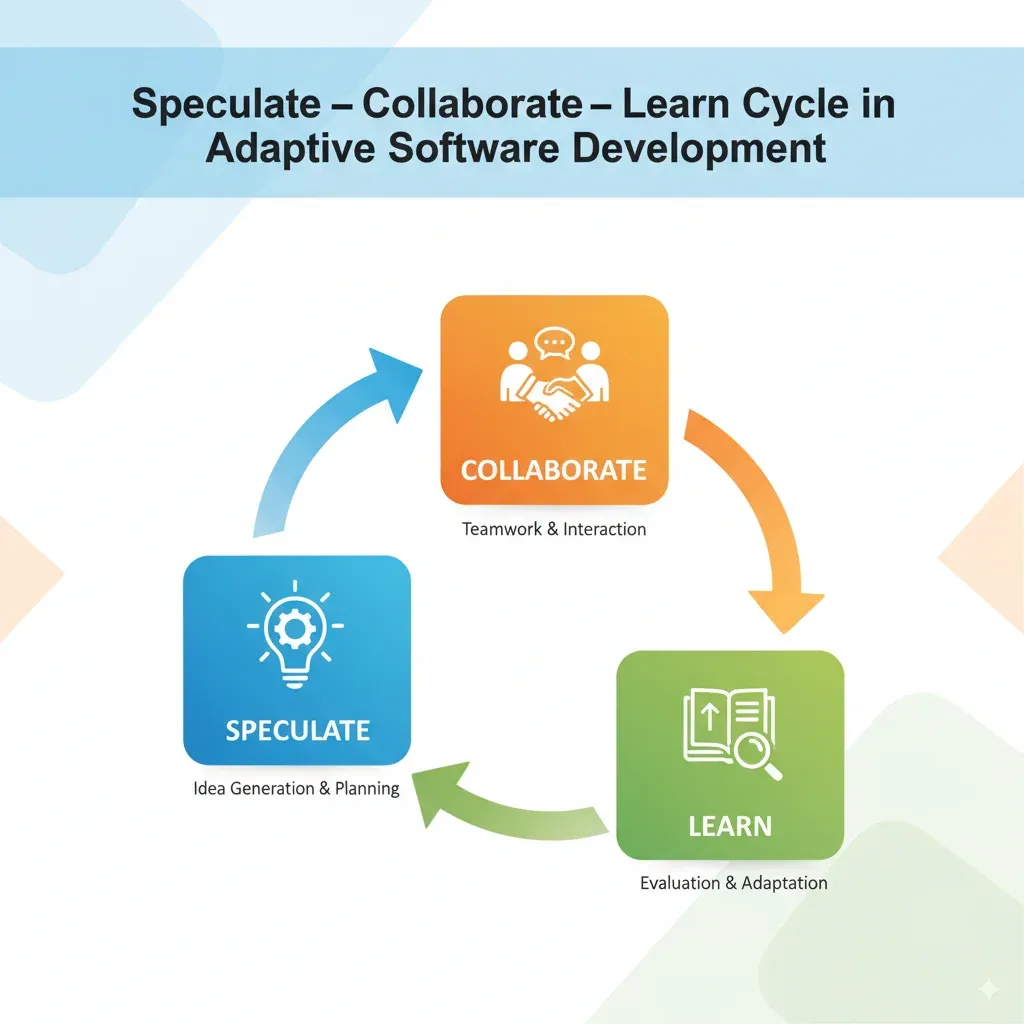
That's why Adaptive Software Development (ASD) was created. Originating in the 1990s as an evolution of Rapid Application Development (RAD), and developed by Jim Highsmith and Sam Bayer, ASD embraces change instead of resisting it. Its Speculate–Collaborate–Learn cycle gives teams the flexibility to adjust as they go, all while staying aligned with the end goal.

In a world where requirements can shift overnight, ASD provides a way to deliver high-quality software without being hindered by outdated plans.

What is Adaptive Software Development (ASD)?

Adaptive Software Development (ASD) is an iterative, agile, and flexible methodology used for software development, enabling the handling of projects with unclear or changing requirements. Whereas ASD does not prohibit teams from using a set plan, it primarily focuses on the ongoing adjustment, close cooperation, and the knowledge gained from each development cycle.

ASD is fundamentally composed of 3 main principles:

 What is Adaptive Software Development (ASD)?
  • Speculate: Use the best available information to set adaptive goals, being aware that change is inevitable.
  • Collaborate: Work in synergy across teams and with the stakeholders to find a solution to the problem.
  • Learn: Continually assess outcomes, collect feedback, and adapt both the product and process for the next iteration.

The idea of ASD was a shift from the Rapid Application Development (RAD) model in the 1990s. Whereas RAD primarily concentrated on rapidity, ASD expanded the strategy to address the complexity, uncertainty, and inevitability of change in contemporary projects.

It was created by Jim Highsmith and Sam Bayer, who recognized the need for a methodology that was more adaptable and learning-oriented, and could thrive in unexpected circumstances.

Core Characteristics of ASD

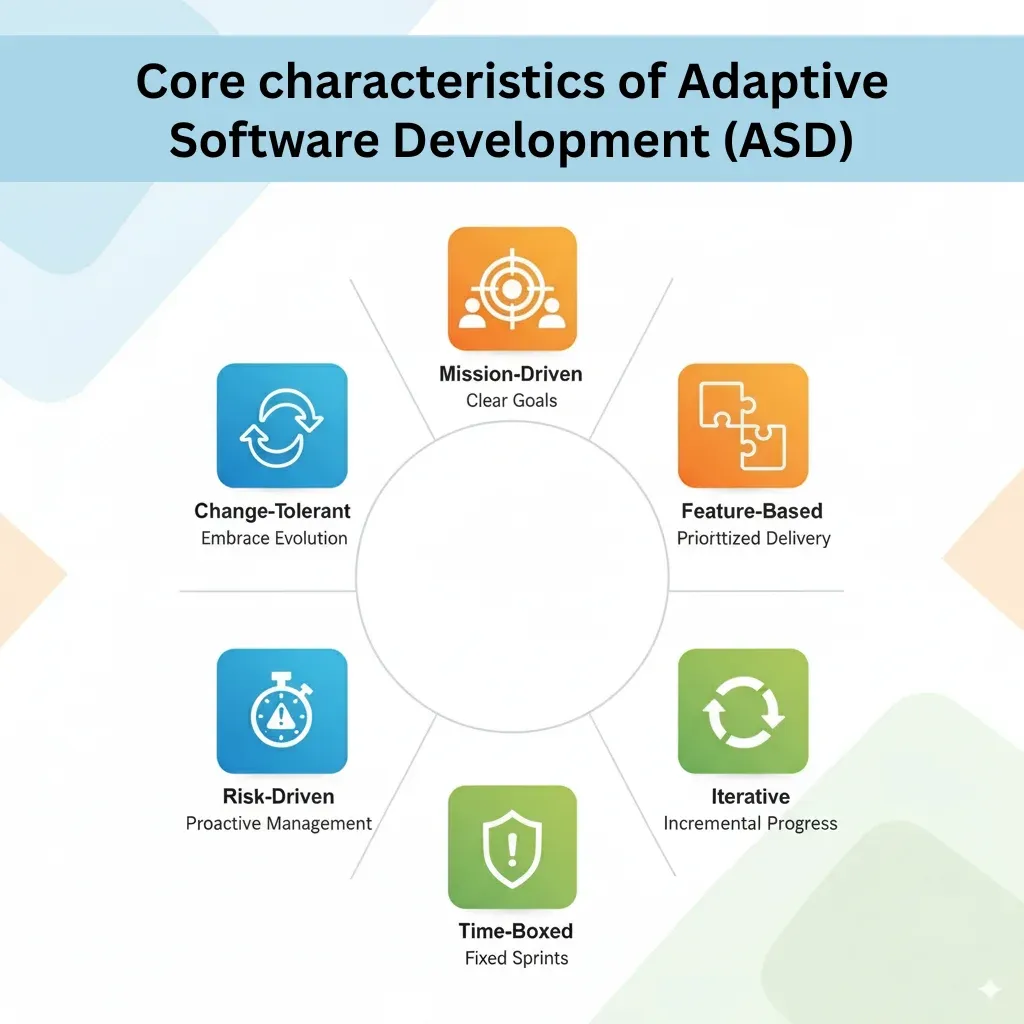
Adaptive Software Development (ASD) is designed to succeed in an environment of uncertainty, where changes occur rapidly and unpredictably. The approach works quite differently from traditional methodologies, as it emphasizes flexibility, teamwork, and continuous improvement. The central tenets of ASD are in line with these ideals:

Core Characteristics of ASD

Mission-Driven: ASD is committed to integrating development activities into its broader mission and aligning them with business objectives. Instead of deeply specifying and fleshing out plans in intricate detail, the teams focus on those activities that will most likely contribute to meeting the organization's objectives. In this way, the software being designed not only provides real value but also remains relevant even if priorities gradually change.

Feature-Based: ASD advocates for the release of working features on an incremental basis, rather than completing the entire system at once. By dividing the work into small, functional features, teams are in a position to release value early, collect feedback, and modify the upcoming work according to the actual usage conditions. This feature-centric approach ensures that stakeholders are regularly updated with new achievements.

Iterative: Iteration is the concept that lies at the center of ASD. The development is accomplished through short, repetitive cycles, followed by a review and evaluation stage. The iterative approach used by teams enables them to analyze what is effective and what is not, implement feedback without any delay, and continue to make continuous improvements to both the product and the development process.

Time-Boxed: ASD employs time-boxing or fixed-duration iterations to keep focus and the flow of work. When the timeframe for each cycle is limited, teams are encouraged to prioritize their tasks, refrain from overexertion, and achieve tangible results within the specified period. Other advantages of time-boxing include a certain level of predictability and the facilitation of the stakeholders' expectations management.

Risk-Driven: Instead of overlooking possible issues, ASD is on the front line with the risks it is aware of. Groups first recognize, evaluate, and resolve risks before they even begin their work. This method not only lessens the number of surprises that may occur, but also facilitates better decision-making and diminishes the chances of making expensive mistakes in the later stages of the project.

Change-Tolerant: Perhaps the most defining feature of ASD is its ability to adapt to change. Instead of resisting shifting requirements, market trends, or user feedback, ASD treats these changes as opportunities for improvement. The methodology encourages flexibility, ensuring that the software evolves in line with actual needs rather than outdated plans.

Benefits of Adopting ASD

Adaptive Software Development (ASD) offers a significant benefit to enterprises operating in a rapidly changing and volatile software development environment. Through the embracement of flexibility, collaboration, and continuous learning, ASD can help teams deliver top-notch software while keeping the risk low. These are the main advantages of the concept:

Enhanced Flexibility in Responding to Changing Requirements: Requirement changes in the modern, ever-changing market are widespread. The characteristics of being iterative and change-tolerant in ASD allow teams to make changes without hassle, ensuring the development process is not interrupted. Consequently, final products will still be relevant and in harmony with business needs, as well as responsive to market shifts.

Improved Collaboration Among Cross-Functional Teams: ASD emphasizes the collaboration that involves not only the development teams but also stakeholders, product owners, and other departments. The teamwork between different functional teams leads to increased communication, a shared understanding, and expedited problem-solving, resulting in easier project execution and higher-quality outcomes.

Better Risk Management Through Early Identification and Mitigation: ASD calls on the teams to identify potential risks for each iteration, rather than waiting until the project's end. Through this risk-driven approach, teams can confront challenges sooner, thereby reducing costly mistakes, and even in the case of instability, maintain project stability.

Continuous Delivery of Value to Stakeholders: By breaking work down into feature-based iterations, ASD enables stakeholders to view visible outputs throughout the project. Continuous delivery maintains stakeholder interest, provides for early feedback, and ensures that the product gets implemented according to actual user needs rather than mere assumptions.

Alignment with Modern Agile Practices and Principles: ASD is deeply committed to the principles shared by agile methodologies, including iterative development, collaboration, and responsiveness to change. An organization that adopts ASD benefits from its agile compatibility, which enables easy integration with other agile frameworks, such as Scrum, Kanban, or Lean, without compromising its distinct emphasis on learning and adaptation.

Implementing ASD in Your Organization

Switching to Adaptive Software Development (ASD) is the game-changer that can enhance your team's flexibility in response to change, foster teamwork, and deliver regular value. Nevertheless, the successful adoption of this practice requires a well-planned approach, effective practices, and supportive tools.

Steps to Transition from Traditional Methodologies to ASD

  • Assess Current Processes: Identify the limitations of your current methodology and recognize where the introduction of flexibility, collaboration, and iterative work is possible.
  • Train Teams on ASD Principles: Ensure all team members and stakeholders are well-informed about the Speculate-Collaborate-Learn cycle, iterative development, and the benefits of implementing change.
  • Start Small: Set up a pilot project or involve a single team with ASD to test the approach, gaining experience with the method through the pilot project, and adapting processes before deploying them organization-wide.
  • Redefine Roles and Responsibilities: Involve others from diverse backgrounds and areas of expertise in the decision-making process, empowering teams to make informed decisions and establishing a communication system that is accessible to all.
  • Establish Feedback Loops: Implement regular reviews, retrospectives, and stakeholder check-ins as a way of learning and adjusting not only the product but also the process.
  • Iterate and Scale: Leverage the learning from the first projects to work more effectively, select the best practices, and gradually propagate ASD practices to larger teams or departments.

Tools and Practices that Support ASD Implementation

  • Project Management Tools: Jira, Trello, or Azure DevOps for managing iterations and feature-based tasks.
  • Collaboration Platforms: Slack, Microsoft Teams, or Confluence for real-time communication and documentation.
  • Continuous Integration/Delivery (CI/CD): Jenkins, GitLab CI, or CircleCI to automate builds, testing, and deployment.
  • Retrospective & Feedback Tools: FunRetro, Miro, or MURAL for running reviews and capturing lessons learned.

Case Studies and Examples of Successful ASD Adoption

  • Large Enterprises: Tech companies with rapidly changing products, like software platforms or SaaS solutions, have adopted ASD to reduce delivery delays and incorporate user feedback quickly.
  • Startups: Early-stage companies use ASD to pivot efficiently when business requirements or customer needs shift.
  • Cross-Functional Teams: Companies with diverse teams across geographies utilize ASD to enhance collaboration and align on shared goals, even in uncertain environments.

Organizations can move from rigid project plans to a flexible, learning-driven approach, ultimately delivering software that is more aligned with user needs and business objectives.

Challenges and Considerations

Although Adaptive Software Development (ASD) has numerous advantages, its implementation still faces innumerable challenges. Identifying possible barriers and developing a plan to overcome them are the essential steps towards a successful changeover.

Potential Obstacles in Adopting ASD

  • Resistance to Change: Groups and stakeholders who are accustomed to conventional methods may be reluctant to adopt new, iterative, and flexible processes.
  • Unclear Roles and Responsibilities: For effective cross-functional collaboration, it is essential to be clear in decision-making as well as in accountability; however, achieving this clarity may be challenging at the outset.
  • Balancing Flexibility and Structure: Although ASD promotes adaptability, the organization may encounter problems such as scope creep, missed deadlines, or loss of focus due to excessive flexibility.
  • Skill Gaps: Teams may be inexperienced with agile practices, risk management, or iterative development.
  • Stakeholder Engagement: Effectiveness requires participation, as timely feedback and cooperation with stakeholders set the stage for achieving good results.

Strategies to Overcome Resistance to Change

  • Educate and Communicate: Train teams and stakeholders in ASD principles, focusing on benefits such as faster delivery, improved quality, and continuous learning.
  • Start Small: Implement ASD on a pilot project to demonstrate the methodology’s benefits and gain trust for further adoption.
  • Involve Leadership: Obtain support from top executives to promote change and provide resources for training and tools.
  • Recognize Early Achievements: Communicate tangible results to build trust and support from initially skeptical team members.

Balancing Flexibility with Necessary Structure

  • Define Clear Goals: Use mission-driven goals to oversee iterative work and ensure flexibility does not lead to unproductive development.
  • Time-Box Iterations: Keep iteration cycles fixed to manage scope and focus teams on their objectives.
  • Establish Feedback Loops: Conduct regular reviews, retrospectives, and stakeholder check-ins to maintain balance between adaptation and project goals.
  • Document Key Decisions: Even in a flexible environment, documenting critical decisions ensures accountability and preserves organizational knowledge.

In this way, organizations can turn the harshest scenarios into opportunities for ASD to deliver most of its advantages. They become adept at implementing change, collaboration, and progression, which constitute the core of the ASD culture.

ASD vs. Other Agile Methodologies

Adaptive Software Development (ASD) shares many principles with popular agile frameworks, such as Scrum, Kanban, and Lean; however, it also possesses unique characteristics that make it well-suited to specific environments. Understanding the differences can help organizations choose the right approach or integrate ASD effectively with other methodologies.

Comparative Analysis

Factor ASD Scrum Kanban Lean
Focus Learning, adaptation, and risk-driven development Iterative sprints with defined roles Continuous flow and visual task management Eliminating waste and maximizing value
Iteration Speculate–Collaborate–Learn cycles; flexible and adaptive Fixed-length sprints (usually 2–4 weeks) No fixed iterations; tasks flow continuously Continuous improvement through value stream optimization
Flexibility High; changes embraced as opportunities Moderate; backlog items can be reprioritized between sprints High; workflow adapts to incoming tasks High; processes adapt to reduce waste
Risk Management Central to the methodology, addressed early Managed within sprint planning and reviews Limited formal risk focus Managed by streamlining processes and eliminating bottlenecks
Collaboration Emphasized across all cycles, including stakeholders Focused on defined roles (Scrum Master, Product Owner, Team) Encourages team collaboration visually, less formal Collaboration through value stream and process improvement

Situations Where ASD is More Beneficial

  • High Uncertainty Projects: When requirements are unclear or rapidly changing, ASD's speculative approach allows teams to adapt effectively.
  • Complex, Risk-Prone Development: ASD's risk-driven mindset enables the identification and mitigation of potential issues early.
  • Need for Continuous Learning: Projects that require frequent feedback, experimentation, and iterative improvement benefit from ASD's learning-focused cycles.
  • Dynamic Stakeholder Environments: When stakeholders' priorities shift often, ASD ensures alignment through ongoing collaboration.

Integration of ASD with Other Agile Frameworks

  • With Scrum: Use ASD principles to guide sprint planning, risk management, and learning, while retaining Scrum's structured roles and ceremonies.
  • With Kanban: Implement continuous flow for tasks while adopting ASD's focus on risk-driven learning and collaboration.
  • With Lean: Combine ASD's adaptive cycles with Lean's waste reduction and value stream optimization for more efficient iterative development.

ASD excels in uncertain and complex environments, but it can also enhance traditional agile frameworks by introducing flexibility, learning loops, and proactive risk management into the development process.

Essence

Traditional, rigid development methods often struggle to keep pace with shifting requirements, evolving user expectations, and unforeseen challenges. Adaptive Software Development (ASD) tackles these issues by embracing change, fostering collaboration, and encouraging continuous learning.

With its emphasis on iterative cycles, feature-focused delivery, and proactive risk management, ASD enables organizations to deliver value consistently while remaining agile and responsive. Its principles not only align with other agile practices but also provide a strong framework for navigating uncertainty, making it especially useful for complex and dynamic projects.

Teams can build software that evolves alongside business goals and user needs, instead of being restricted by rigid plans. This learning-driven approach helps transform change into opportunity, ensuring continuous growth for both the software and the organization.

If you’re looking to implement modern development practices, visit Elightwalk to explore agile solutions. Need skilled professionals to bring your project to life? Hire expert software developers from Elightwalk and build adaptive, future-ready software tailored to your goals.

FAQs about Adaptive Software Development

What is Adaptive Software Development (ASD)?

How is Adaptive Software Development different from Scrum or Kanban?

What are the benefits of using Adaptive Software Development?

Can Adaptive Software Development be combined with other agile methodologies?

Jayram Prajapati
Full Stack Developer

Jayram Prajapati brings expertise and innovation to every project he takes on. His collaborative communication style, coupled with a receptiveness to new ideas, consistently leads to successful project outcomes.

Most Visited Blog

Augmented Reality (AR) the Future of eCommerce Business
Augmented reality (AR) is changing eCommerce by making the shopping experience better for customers, getting them more involved, and increasing sales in the online market.
Best Shopify Themes for your E-commerce Store 2025
Elevate your e-commerce store with stunning, responsive, and high-converting Shopify themes. Find the perfect design for your brand today!
After move to another server ScandiPWA theme is not responding.

Are you having problems with the ScandiPWA theme after a server migration? To maintain responsiveness and performance on Magento PWA storefront, use our simple guide to effectively troubleshoot.