Loading...

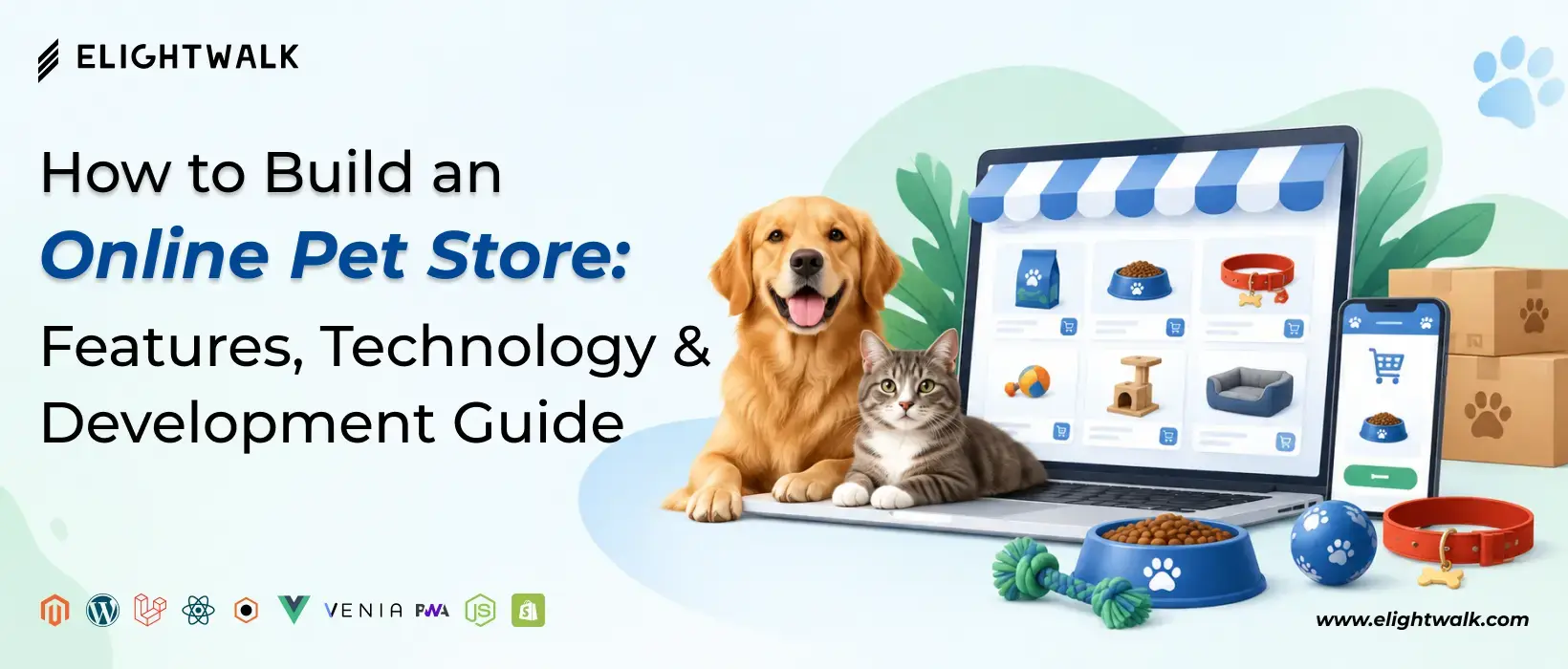
How to Build an Online Pet Store: Features, Technology & Development Guide

15 Mins
Pravin Prajapati  ·   02 Oct 2026
Share to:
Online pet store features, technology, and development guide
service-banner

How people shop for pet products is changing as more pet owners look for convenient ways to buy food, treats, toys, grooming supplies, accessories, and other essentials online. For pet businesses, having an online presence can create new opportunities to reach customers, simplify repeat purchases, and provide a more convenient shopping experience.

Building a thriving online pet store takes more than listing goods on an ecommerce website. An online store needs to be easy to access and navigate, offer an organized product catalog, provide a personalized experience, include secure payments and reliable delivery options, and add other features that encourage customers to shop again.

If you plan to build an online pet store, consider your business model, target customers, product catalog, ecommerce features, technology, integrations, scalability, and overall customer experience before you begin development.

This guide explores the essential features, advanced functionality, technology considerations, integrations, development process, and best practices you should consider when building a modern pet ecommerce website.

Why Build an Online Pet Store?

The shift toward online shopping is creating new opportunities for pet businesses to serve customers more conveniently and expand how they sell products. An online store can become more than a digital product catalog; it can support customer engagement, repeat purchases, and long-term business growth.

Growing Demand for Convenient Pet Shopping

Pet owners constantly look for a convenient way to buy pet food, treats, toys, grooming products, accessories, and other supplies. An online pet store can help customers compare options and shop online to avoid going to a physical store. Since many people already use their mobile devices for most errands, an online pet store can also be mobile-friendly to ensure convenience.

This platform would also give the business a chance to reach a broader audience. A physical store often has limited regional reach because of its location. However, an ecommerce website can attract customers from around the world.

Create a Direct Online Sales Channel

An ecommerce store gives a company direct access to its customers. In other words, the business gains another channel to sell its products and becomes less dependent on foot traffic in the physical store or other marketplaces. A website can also give better control over the audience and help the company build stronger customer relationships. For example, sales data from an online store can help the management identify popular and unpopular items and adjust the assortment.

Moreover, if a company has built a strong relationship with its customers, it can collect feedback and use discounts or other promotions to encourage repeat purchases.

Facilitate Repeat Purchases

Pet owners are constantly purchasing goods: pet food, treats, toys, bedding, litter, cleaning supplies, and countless other products. Make the purchase process as convenient as possible so clients return to buy more often.

Features such as Buy Again, saved products, subscriptions, and recurring orders will help achieve this goal. Moreover, implementing these functions will increase order values, improve customer retention, and maximize customer lifetime value by making it easier to shop again.

How Does an Online Pet Store Work?

An online pet store’s functions connect the customer experience with administrative activities, creating an integrated and organized process for buying and selling products. First, the customer finds the page through search engines, social networks, banners, and other sources. Then, the buyer studies the website, looks for the required category, or uses the search engine and filters. After that, the customer adds the product to the cart, goes to the checkout page, chooses a payment method and delivery conditions, and pays for the order. Then, the person can reorder the product using coupons and discounts or subscribe to the purchase. Finally, the client receives the purchased goods at the address specified in the order.

The pet store's back end is the administrative part that connects all the site's components. It serves as the foundation for building the online store and ensures products are delivered to the client. It manages goods, orders, customers, analytics, shipping, and other functions for both parties. The admin panel is vital because it helps maximize efficiency, organize the catalog, track statistics, analyze customer behavior, and maintain the website.

Essential Features of an Online Pet Store

Building an online pet store involves more than displaying products and adding a checkout button. Pet owners often search for products based on their pet's type, age, breed, size, dietary needs, and lifestyle. The right pet store website features should therefore make product discovery simple while helping the business manage the shopping journey efficiently.

Pet-Based Navigation

A clear category structure helps customers reach relevant products without going through a long list of unrelated items. An online pet store can organize its catalog by pet type, such as Dogs, Cats, Birds, Fish, and Small Pets. Within each category, businesses can further organize products into food, treats, toys, grooming, accessories, healthcare, and hygiene. This makes navigation easier for customers and gives businesses a structured way to manage a growing product catalog.

As the number of products increases, simple categories may not be enough. Customers need faster ways to narrow down their choices and find products that match their specific requirements.

Advanced Product Search and Filters

An effective search and filtering system is an important pet ecommerce feature for a large product catalog. Customers should be able to search by product name and refine results using filters such as pet type, breed, age, size, brand, product type, price, and dietary requirements. For example, a customer looking for food for a senior large-breed dog should be able to narrow the results without manually checking dozens of products. Better product discovery reduces shopping effort and helps customers find relevant products faster.

Once customers find a product that interests them, the product page needs to provide enough information to support their purchase decision.

Detailed Product Pages

A well-designed product page should give customers a clear understanding of what they are buying. Important information can include high-quality product images, descriptions, ingredients or specifications, suitable pet types, customer reviews, stock availability, and delivery information. For pet products, clear product information is particularly useful because customers may need to check ingredients, suitability, size, usage instructions, or other specifications before ordering. Businesses can also use product pages to highlight related products and recommendations.

After customers have made their selection, the checkout process should keep the final steps simple and convenient.

Shopping Cart and Simple Checkout

A straightforward cart and checkout experience helps customers complete purchases without unnecessary steps. The store can support guest checkout, customer accounts, saved addresses, and multiple payment options based on the business requirements.

Customers should be able to review their products, quantities, delivery details, and final order information before completing payment. A mobile-friendly checkout is also important because many shoppers access ecommerce stores from smartphones. The experience does not end when payment is completed. Customers also need visibility into what happens after placing an order.

Order Tracking

Order tracking gives customers confidence that their purchase is progressing as expected. The store can display stages such as order confirmation, processing, shipping, and delivery tracking.

Clear status updates can reduce uncertainty and the need for customers to contact support for basic order information. From the business side, connected order and shipping workflows can also make fulfillment easier to manage. Finally, an online pet store should provide customers with opportunities to share their experiences and help future shoppers make informed decisions.

Customer Reviews and Ratings

Customer reviews and ratings can add useful social proof to product pages. Customers can share their experience through written reviews and ratings, while verified purchase reviews can provide additional context for shoppers evaluating a product.

Reviews can also give businesses direct feedback about products and the overall shopping experience. Over time, this information can help identify customer preferences, improve product selection, and build greater trust within the store.

Together, these features create a smoother customer journey while giving businesses the tools they need to manage and grow their online pet store effectively.

Advanced Features to Improve the Pet Shopping Experience

Once the essential functionality is in place, an online pet store can introduce advanced features that make shopping more relevant, convenient, and personalized. These capabilities can help businesses understand customer needs, encourage repeat purchases, and create a shopping experience that feels more tailored to individual pets.

Personalized Pet Profiles

Pet owners have different requirements depending on their pet's characteristics. A personalized pet profile lets customers save information such as pet name, species, breed, age, size, and preferences in their account.

This information can make the shopping experience more relevant. For example, customers could quickly view products suitable for a particular pet instead of repeatedly entering the same information while searching. As the store learns more about customer preferences, it can create a more convenient and personalized experience.

Personalized Product Recommendations

Product recommendations suggest similar products based on the user’s pet profile, website activity, past purchases, or items added to the comparison list. Instead of “Recommended for you,” the store can offer “Recommended for your Labrador,” “Products suitable for senior cats,” or “You may also need…”

Personalization helps customers find the right product faster and suggests additional items that may interest them.

Subscription and Recurring Orders

Many pet products need to be bought frequently, so it is a good idea to make subscriptions a significant part of the ecommerce. Customers can subscribe to products like food or litter and receive regular shipments based on their preferences.

The store should let subscribers change or cancel their subscription at any time, reducing the number of repetitive orders they have to place. Alternatively, it could set a yearly or monthly purchase schedule to help customers avoid forgetting to buy pet supplies.

Buy Again and Quick Reordering

Customers frequently buy the same pet products over and over again. A Buy Again or quick-reorder feature could let customers view what they previously purchased and quickly reorder products they buy frequently.

Instead of searching through the entire product catalog, the customer could click a previously purchased product and reorder it faster. This feature could help repeat customers buy what they need faster and make them more likely to return to the site for regular purchases.

Wishlist and Saved Products

Not every customer is ready to purchase immediately after finding a product they're interested in. A wishlist serves as a useful reminder, helping customers shop with ease and build a list of items they intend to purchase later. Similarly, saved products let users save items for later purchase, compare them, and return to them for further research.

Loyalty and Rewards

Loyalty programs offer a strong opportunity to encourage customers to return to the online store. Businesses can use rewards, points, member-exclusive offers, and other benefits based on their loyalty program strategy. Combining purchase history and preferences enables businesses to offer more relevant rewards, rather than generic discounts and points.

Overall, these two advanced features can help a pet ecommerce business transform an ordinary catalog shopping experience into a more personalized and engaging one. They can also boost sales and customer retention by increasing customer lifetime value. For businesses considering an online pet store, these features can also help differentiate their offering in the marketplace.

What Products Can You Sell Through an Online Pet Store?

A well-planned product catalog is a foundation of a successful pet product ecommerce website. Pet owners may visit a store looking for a specific item, while others may browse based on their pet's needs. Organizing products into clear categories makes it easier for both types of customers to find what they need and discover related products.

Category Examples
Pet Food Dry food, wet food, treats
Grooming Shampoo, brushes, dental care
Toys Chew toys, interactive toys
Accessories Collars, leashes, beds
Healthcare Wellness and care products
Hygiene Litter, cleaning products
Travel Carriers, travel accessories

A pet food ecommerce website, for example, can further organize food products by pet type, age, breed, dietary requirements, brand, or product format. Similarly, grooming products can be grouped by pet type or specific grooming needs.

This category architecture creates a more structured shopping experience. Customers can start with broad categories and gradually narrow their choices using subcategories, filters, and search. It can also help businesses showcase complementary products—for example, displaying treats alongside pet food or travel accessories alongside carriers.

As the catalog expands, a scalable category structure becomes even more important. A well-organized online pet shop can add new brands, products, and categories without making the shopping experience confusing or difficult to navigate.

Admin Features for Managing an Online Pet Store

While customers interact with the storefront, business owners need a central system to manage the operations behind it. A well-designed admin panel gives store owners control over products, inventory, orders, customers, promotions, and business performance from one place.

Product & Category Management

The admin panel should make it simple to add and edit products, create categories, manage attributes, and configure product variations. Businesses can update product information, images, specifications, pricing, and other details as their catalog changes. A flexible product management system also makes it easier to expand the store with new pet categories, brands, and product ranges.

Inventory Management

Accurate stock information is essential to avoid overselling and missed sales opportunities. Store owners should be able to monitor stock levels, receive low-stock alerts, and update inventory as products sell or are replenished. Inventory visibility can also help businesses identify fast-selling products and plan restocking more effectively.

Order Management

An ecommerce admin system should provide a clear view of the entire order lifecycle. Businesses can manage new orders, processing, returns, cancellations, and fulfillment from a centralized dashboard. Connecting order management with shipping and payment workflows can further reduce manual work and make fulfillment easier to track.

Customer Management

Customer management tools allow businesses to view customer profiles, order history, preferences, and customer segments. This information can help businesses understand purchasing patterns and create more relevant communication and marketing campaigns. For example, businesses can approach customers who regularly purchase pet food with relevant reorder reminders or product recommendations.

Promotions & Marketing

The admin panel can also support promotional activities through coupons, discounts, product bundles, and marketing campaigns. Businesses can use these tools to promote selected products, introduce new collections, encourage repeat purchases, or run seasonal campaigns.

Analytics & Reporting

Finally, analytics provide visibility into how the store is performing. Businesses can monitor sales, orders, best-selling products, and customer activity to understand what is working and where improvements may be needed. For businesses investing in pet store website development or pet ecommerce development, these admin capabilities matter because they turn the website into an operational platform, not simply an online product catalog.

Integrations Your Online Pet Store May Need

While customers interact with the storefront, business owners need a central system to manage the operations behind it. A well-designed admin panel gives store owners control over products, inventory, orders, customers, promotions, and business performance from one place.

Product & Category Management

The admin panel should make it simple to add and edit products, create categories, manage attributes, and configure product variations. Businesses can update product information, images, specifications, pricing, and other details as their catalog changes. A flexible product management system also makes it easier to expand the store with new pet categories, brands, and product ranges.

Inventory Management

Accurate stock information is essential to avoid overselling and missed sales opportunities. Store owners should be able to monitor stock levels, receive low-stock alerts, and update inventory as products sell or are replenished. Inventory visibility can also help businesses identify fast-selling products and plan restocking more effectively.

Order Management

An ecommerce admin system should provide a clear view of the entire order lifecycle. Businesses can manage new orders, processing, returns, cancellations, and fulfillment from a centralized dashboard. Connecting order management with shipping and payment workflows can further reduce manual work and make fulfillment easier to track.

Customer Management

Customer management tools allow businesses to view customer profiles, order history, preferences, and customer segments. This information can help businesses understand purchasing patterns and create more relevant communication and marketing campaigns. For example, businesses can approach customers who regularly purchase pet food with relevant reorder reminders or product recommendations.

Promotions & Marketing

The admin panel can also support promotional activities through coupons, discounts, product bundles, and marketing campaigns. Businesses can use these tools to promote selected products, introduce new collections, encourage repeat purchases, or run seasonal campaigns.

Analytics & Reporting

Finally, analytics provide visibility into how the store is performing. Businesses can monitor sales, orders, best-selling products, and customer activity to understand what is working and where improvements may be needed. For businesses investing in pet store website development or pet ecommerce development, these admin capabilities matter because they turn the website into an operational platform, not simply an online product catalog.

Choosing the Right Technology for Your Pet Ecommerce Website

Choosing the right technology for a pet ecommerce website should start with your business requirements, not a specific technology stack. Your business model, product catalog size, expected traffic, and required functionality can all influence the right approach. You should also consider integrations with payment gateways, shipping providers, CRM, inventory, or ERP systems, as well as scalability, security, maintenance, and future expansion.

SaaS Ecommerce

SaaS ecommerce platforms can suit businesses that want a quicker setup with less technical maintenance. They provide ready-made ecommerce capabilities and help businesses launch an online store without managing the underlying infrastructure. This approach may work well for straightforward requirements and businesses looking to start quickly.

Open-Source Ecommerce

Open-source ecommerce platforms provide greater control over customization and platform configuration. They can be useful when a business needs more flexibility in its storefront, integrations, or functionality while still working with an established ecommerce foundation.

Custom Ecommerce Development

Custom development can help when your business needs unique workflows, specialized integrations, advanced personalization, or a distinctive customer experience. A custom pet store website can be designed around specific operational requirements and future growth plans. For businesses with complex needs, pet ecommerce development provides the flexibility to build a scalable pet ecommerce platform.

How to Build an Online Pet Store Step by Step

Building an online pet store requires more than setting up product pages and a checkout process. A practical development roadmap helps you define the business requirements, plan the customer experience, build the store, and prepare it for long-term growth.

1. Define Your Business Model

Start by deciding how your online pet store will operate. You may choose a single-brand store, multi-brand store, marketplace, or subscription model. Your business model will influence product management, seller functionality, payments, fulfillment, and other ecommerce requirements.

2. Define Your Target Customers

Identify the customers you want to serve. This could include dog owners, cat owners, multi-pet households, or buyers of premium pet products. Understanding your target audience helps shape product selection, navigation, recommendations, pricing, and marketing.

3. Plan Your Product Catalog

Organize your products into clear categories, subcategories, attributes, and filters. Define product information, pricing, images, inventory requirements, and variations before development begins.

4. Design the User Experience

Create a simple shopping journey from product discovery to checkout. Focus on intuitive navigation, search, filtering, product pages, mobile responsiveness, and an easy checkout experience.

5. Develop the Ecommerce Store

Build the storefront and backend functionality based on your business requirements. This includes product management, customer accounts, cart, checkout, order management, inventory, and other required features.

6. Integrate Payments, Shipping & Other Services

Connect payment gateways, shipping and delivery services, CRM, analytics, inventory, or other systems required for daily operations.

7. Test the Store

Test the website across devices and browsers. Check product searches, filters, checkout, payments, order processing, shipping updates, forms, and other critical workflows before launch.

8. Launch and Continuously Improve

After launching your online pet store, monitor customer behavior, sales, performance, and feedback. Use these insights to improve the experience, introduce new features, optimize operations, and support future growth. A continuous improvement approach is essential for successful online pet store development.

Whether you want to build an online pet store or build a pet ecommerce website for a growing business, following a structured roadmap can help turn your ecommerce concept into a scalable digital store.

How to Make Your Online Pet Store Scalable

Launching your online pet store is only the beginning. As your customer base, product catalog, order volume, and business needs grow, your ecommerce platform must scale without compromising performance or customer experience. Planning for scalability from the start makes it easier to support future expansion.

Scalable Infrastructure

Choose an infrastructure that can handle increasing traffic, orders, and product data. A scalable architecture lets your store support growth while reducing the need for major technical changes later.

Optimized Product Catalog

Keep product categories, attributes, images, and descriptions organized as your catalog expands. A well-structured catalog makes product discovery easier and helps you manage the store efficiently.

Performance and Mobile Experience

Monitor page speed, server performance, and overall website responsiveness as traffic increases. Since customers may shop from smartphones, maintain a fast, mobile-friendly experience across devices.

Search Optimization

Continue improving product search, filters, category pages, and SEO as you add new products and categories. Better search functionality helps customers find relevant products quickly.

Inventory and Payment Scalability

Support growing inventory requirements and consider multiple payment and shipping options as your business expands. Integrating additional services can give customers and operations greater flexibility.

New Product Categories and Mobile Apps

As customer demand changes, you may introduce new pet categories, products, or services. A scalable platform should also allow you to extend the experience through a mobile app when it makes business sense.

Marketplace Expansion and Personalization

If your business model evolves, you may expand from a single store to a marketplace that supports multiple sellers. Personalization can also make the experience more relevant by using customer preferences, pet profiles, browsing behavior, and purchase history.

A scalable pet ecommerce platform should therefore be designed with the future in mind. The right development partner can support your business beyond the initial website by helping with architecture, integrations, new features, mobile commerce, optimization, and ongoing improvements. This makes ecommerce development an ongoing technology partnership, not a one-time website project.

Common Mistakes to Avoid When Building a Pet Store Online

Building an online pet store requires more than applying standard ecommerce functionality. Pet businesses have specific customer needs, product types, and repeat-purchase patterns to consider during development. Avoiding common mistakes can help create a more convenient shopping experience and a stronger foundation for growth.

Treating It Like a Generic Ecommerce Store

A pet store has different requirements from a general ecommerce business. Consider product discovery, pet profiles, dietary requirements, repeat purchases, and pet-specific recommendations when planning the store.

Poor Product Categorization

Unclear categories can make it difficult for customers to find relevant products. Organize products by pet type, product type, age, size, brand, dietary requirements, or other relevant attributes.

Complicated Checkout

An unnecessary checkout process can make purchasing frustrating. Keep the process simple, provide clear order information, and offer suitable payment and delivery options.

Ignoring Mobile Users

Many customers access ecommerce stores through smartphones. A poor mobile experience can make browsing, product discovery, and checkout difficult.

No Repeat-Order Functionality

Pet owners frequently purchase products such as food, treats, and hygiene supplies. Features such as Buy Again, quick reorder, or subscriptions can make repeat purchases more convenient.

Weak Search and Filtering

Customers should be able to find products quickly using relevant search terms and filters. Weak search functionality can become particularly problematic as the product catalog grows.

Poor Product Information

Product pages should provide clear information about images, descriptions, ingredients or specifications, suitability, availability, and delivery details.

No Inventory Strategy

Poor inventory management can lead to inaccurate stock information, missed sales opportunities, or overselling. Plan inventory management and stock visibility as part of the ecommerce system.

Ignoring Scalability

A store that works with a small catalog and limited traffic may face challenges as the business grows. Consider future products, customers, orders, integrations, and other expansion requirements during development.

Lack of Customer Support

Customers may need help with products, orders, payments, delivery, or returns. Accessible customer support makes it easier to resolve issues and maintain a reliable shopping experience.

Avoiding these mistakes can help businesses build an online pet store that is easier to use, manage, and expand as customer and business requirements evolve.

Build Your Online Pet Store With the Right Ecommerce Development Partner

Building an online pet store requires more than setting up product pages and a checkout system. Your ecommerce website should be designed around your business model, customer needs, product catalog, and future growth plans. At Elightwalk, we help businesses build customized ecommerce solutions designed around their specific requirements. From user experience and storefront design to backend functionality and integrations, our team supports every stage of online pet store development.

Our ecommerce development capabilities include:

  • Custom Ecommerce Development: Build an online pet store with functionality tailored to your products, customers, and business workflows.
  • UI/UX Design: Create intuitive navigation, product discovery, filtering, checkout, and mobile-friendly shopping experiences.
  • Scalable Architecture: Develop ecommerce solutions that can accommodate growing product catalogs, customer traffic, orders, and future features.
  • Third-Party Integrations: Connect payment gateways, shipping providers, CRM systems, inventory platforms, analytics tools, and other services your business requires.
  • Custom Features: Add functionality such as pet profiles, personalized recommendations, subscriptions, quick reordering, wishlists, loyalty programs, and other pet ecommerce features.
  • Mobile Commerce: Extend your ecommerce experience to mobile devices and support a consistent shopping journey across different screen sizes and platforms.
  • Ongoing Support: Continue improving, maintaining, and expanding your ecommerce solution as your business requirements evolve.

Whether you are launching a new pet ecommerce website, upgrading an existing online store, or planning a larger pet marketplace, choosing the right development approach can help you build a foundation for long-term growth. Have an idea for an online pet store? Talk to our ecommerce development team about your requirements.

Essence

Building an online pet store involves more than listing pet products and adding an online checkout. A successful pet ecommerce website needs intuitive navigation, pet-based product discovery, advanced search and filters, detailed product pages, secure payments, order tracking, personalized recommendations, subscriptions, quick reordering, and efficient store management.

The right technology and development approach can also make it easier to integrate payment gateways, shipping providers, CRM, and inventory systems while supporting future growth. Whether you are starting a small online pet shop, expanding an established pet business, or planning a multi-seller marketplace, scalability, performance, mobile experience, and customer convenience should remain key considerations throughout development.

If you're planning to build an online pet store, Elightwalk can help turn your ecommerce requirements into a customized digital solution. From UI/UX and custom functionality to integrations, scalable architecture, mobile commerce, and ongoing support, our team can help you develop an ecommerce experience aligned with your business goals.

Explore our Magento Development Services to learn how we can support your ecommerce development requirements. Ready to build your online pet store? Talk to the Elightwalk ecommerce development team today and discuss your idea, features, and business requirements.

FAQs about Build an Online Pet Store

What do I need to build an online pet store?

What features should an online pet store have?

Can I build a pet store with subscription orders?

Can an online pet store support multiple sellers?

Can I integrate payment and shipping services?

Should I build a mobile app for my pet store?

Can a pet ecommerce website be customized?

How can I make my online pet store scalable?

Pravin Prajapati
Full Stack Developer

Expert in frontend and backend development, combining creativity with sharp technical knowledge. Passionate about keeping up with industry trends, he implements cutting-edge technologies, showcasing strong problem-solving skills and attention to detail in crafting innovative solutions.

Most Visited Blog

AI-Driven Insights into E-Commerce Consumer Behavior
Learn how AI insights help e-commerce brands understand shoppers. They personalise experiences, boost conversions, and make smarter business choices.
How AI Is Transforming the B2C Shopping Experience
Learn how AI is transforming the B2C shopping experience with personalization, predictive analytics, chatbots, and more intelligent search to boost sales and customer satisfaction.
A Complete Guide to Angular 21: Phases, Features, and Upgrade Strategy
A complete Angular 21 guide covering release phases, key features, zoneless change detection, signals, performance upgrades, and the Angular 21 vs Angular 20 comparison.